
Why a Cultural Evening Can Make Your Bali Holiday Feel More Complete
A Bali holiday can be filled with beautiful experiences.
You may spend the morning walking through rice terraces, visit a waterfall in the afternoon, watch the sunset near the coast, and end the day with dinner at a restaurant.
Nature, food, and relaxation are important parts of the journey. However, they only reveal one side of the island.
Bali is also shaped by sacred spaces, traditional stories, local performers, community traditions, and artistic expressions that continue across generations.
This is why adding a Bali cultural evening to your travel plan can make the entire holiday feel more complete.
At Puseh Temple Batubulan, visitors can experience Kecak, Fire Dance, and Sang Hyang Jaran within the atmosphere of a classic Balinese temple. Located relatively close to the city, the daily performance offers an accessible way to discover Bali beyond its landscapes and dining scene.
It gives your journey something more than another beautiful place. It gives it culture, story, rhythm, and emotional meaning.
A Complete Bali Trip Needs More Than Beautiful Scenery
Bali is widely known for its natural beauty.
Beaches, mountains, waterfalls, rice fields, forests, and coastal sunsets often become the main focus of a Bali holiday itinerary. These destinations deserve to be explored, but scenery alone does not explain what gives the island its distinctive identity.
Bali’s character also lives through its people and traditions.
Daily offerings, temple ceremonies, traditional architecture, music, dance, storytelling, and community performance are all part of the cultural life visitors encounter throughout the island.
When travelers only move from one scenic location to another, they may see Bali without fully experiencing how it lives.
A cultural evening adds a different dimension.
Instead of only observing a landscape, visitors enter a space shaped by local voices, traditional characters, sacred movement, and living heritage. They begin to connect the temples they have photographed with the culture that gives those temples meaning.
This is what makes a trip feel more balanced.
Nature shows you the island’s beauty. Culture helps you understand its identity.
Food Introduces Bali Through Taste but Performance Adds Story
Food is another important part of traveling in Bali.
Local dishes, cafés, restaurants, and dining experiences can introduce visitors to new flavors and ingredients. Sharing a meal can also become one of the most enjoyable parts of a holiday.
However, dinner does not need to be the only plan after sunset.
A cultural performance gives the evening a story.
At Puseh Temple Batubulan, the night develops through a sequence of connected moments. Visitors enter the temple atmosphere, hear the Kecak rhythm created by local performers, follow characters from the Ramayana, watch fire change the visual energy, and encounter the sacred presence of Sang Hyang Jaran.
These elements give the evening emotional movement.
There is anticipation as the performance begins, tension as the story develops, excitement when fire enters the scene, and a deeper sense of attention during the sacred moments.
Dinner can still remain part of the plan.
You can eat before the performance or continue to a restaurant afterward. The difference is that your evening now carries a cultural memory rather than ending with a meal alone.
A Classic Temple Setting Changes How the Night Feels

The location of a performance strongly influences the experience.
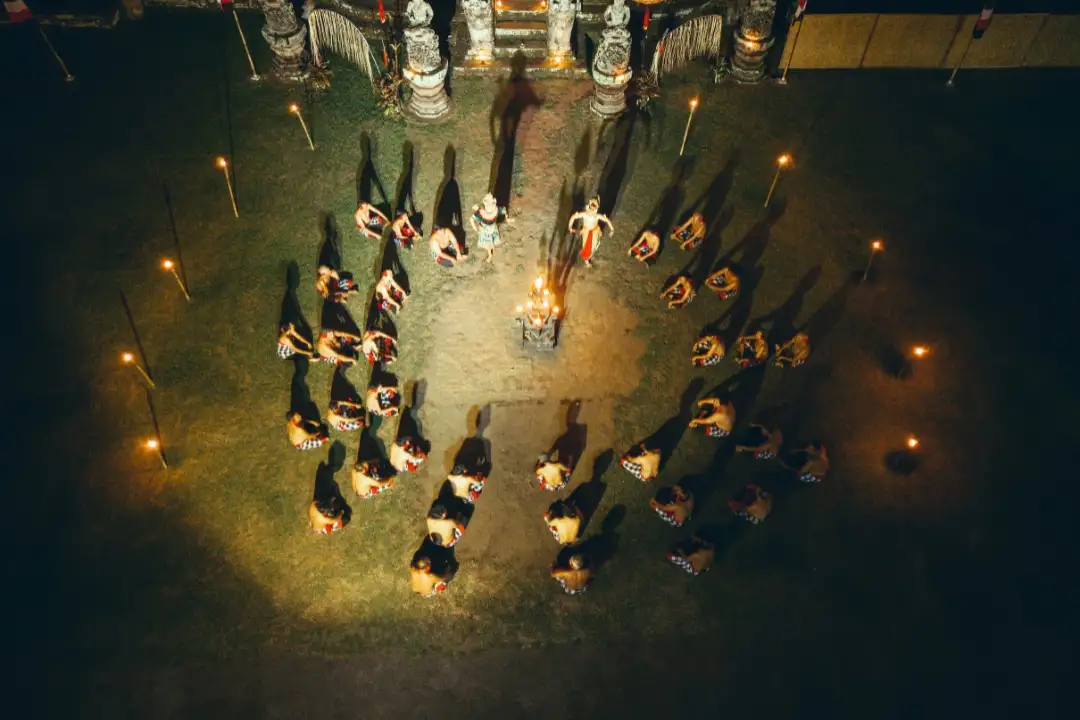
Puseh Temple Batubulan is not a modern theatre or a temporary event venue. The performance unfolds within the ambience of a traditional temple setting.
Stone carvings, classic gates, heritage architecture, and warm evening light surround the audience before the first Kecak voices begin.
The temple is not simply a decorative background.
It becomes part of the cultural night.
The architecture gives context to the characters and movements. The darker temple surroundings make the fire feel more dramatic. The traditional atmosphere also allows sacred moments to feel more naturally connected to place.
For travelers searching for a classic temple Bali experience, this setting becomes one of the strongest reasons to attend.
Visitors are not only watching a performance placed in front of them. They are entering an environment where space, rhythm, story, and tradition work together.
This creates a stronger sense of being present within Bali’s cultural world.
Kecak Brings Collective Energy Into the Evening

One of the defining elements of Kecak dance Bali is its powerful vocal rhythm.
A circle of local performers creates coordinated patterns through human voices rather than a conventional musical orchestra. Their rhythm becomes the foundation of the performance.
The voices may begin steadily, then become faster or more intense as the story unfolds.
They create anticipation, support dramatic scenes, and surround the Ramayana characters with collective energy.
Inside Puseh Temple Batubulan, the Kecak rhythm feels closely connected to the temple surroundings.
The sound fills the space instead of coming from a distant speaker. Every performer contributes to the larger pattern, creating an atmosphere that depends on human coordination and shared focus.
For visitors, this can become one of the strongest sensory memories of the holiday.
A photograph may capture the circle of performers, but it cannot completely reproduce how their voices feel inside the temple at night.
This live rhythm gives the evening an energy that cannot be experienced through scenery or dining alone.
The Ramayana Gives the Performance Emotional Meaning
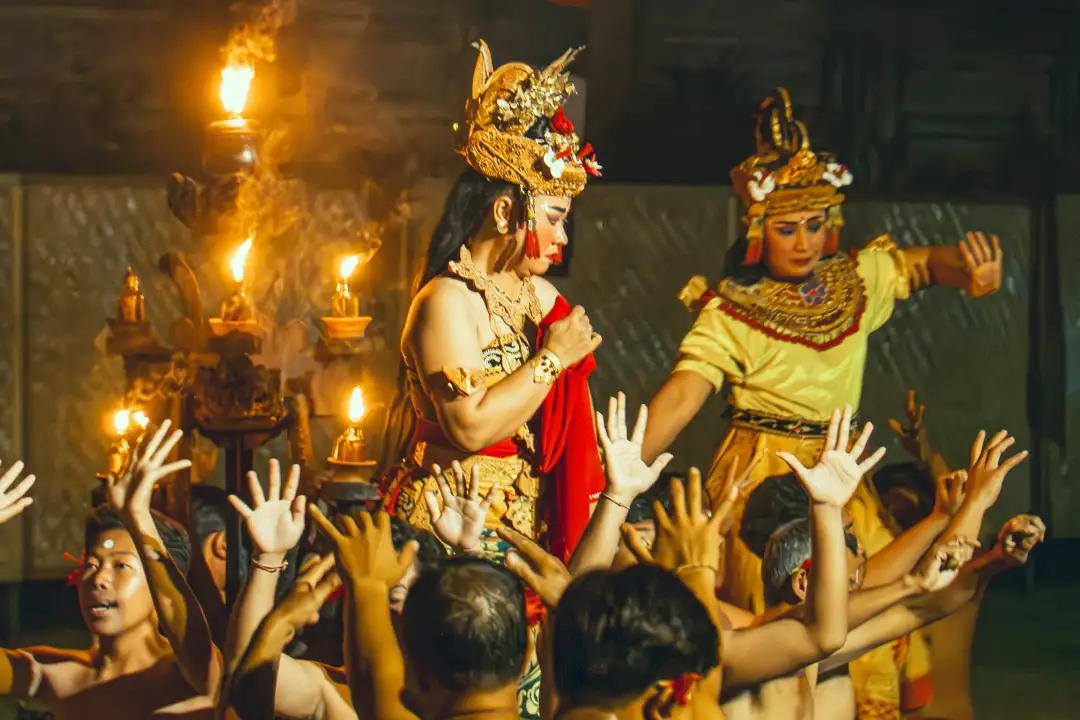
The Kecak rhythm creates the atmosphere, while the Ramayana gives the evening a story.
Characters such as Rama, Sita, Hanuman, Jatayu, and Ravana introduce courage, loyalty, devotion, sacrifice, and conflict through costume, movement, and expression.
Visitors do not need to understand every detail of the Ramayana before attending.
The emotional direction of the story can still be followed visually. Hanuman brings powerful energy. Rama represents courage and devotion. Sita adds emotional depth, while Ravana creates tension within the performance.
These characters transform the night from a collection of traditional movements into a narrative.
Travelers can follow the scenes, recognize emotional changes, and leave with moments to discuss after the performance ends.
The temple atmosphere makes the story feel even more connected to Bali’s cultural heritage.
Instead of appearing on a neutral stage, the Ramayana characters move within a space shaped by traditional architecture and evening ambience.
Fire Creates the Visual Highlight
As the performance develops, Fire Dance changes the energy of the night.
The flames create a dramatic contrast against the darker temple surroundings. Movement becomes more intense, while the Kecak voices continue around the scene.
For many visitors, this becomes the most visually memorable moment.
However, the fire does not stand alone.
Its power comes from the rhythm, story, and atmosphere that have already been established. The audience has entered the temple setting, listened to the Kecak circle, and followed the Ramayana characters before the flames appear.
Fire becomes the visual climax of the wider cultural evening.
It captures attention without replacing the meaning of the performance.
This balance is important. Visitors receive the dramatic moment they expect from a Kecak Fire Dance experience, while the night remains grounded in Balinese story, tradition, and temple ambience.
Sang Hyang Jaran Adds a Sacred Layer
The cultural experience becomes deeper through Sang Hyang Jaran.
Sang Hyang Jaran is a sacred Balinese dance connected to ritual movement, spiritual energy, and traditional meaning. Its presence gives the evening another dimension beyond the visual intensity of Kecak and fire.
This part of the performance should not be viewed only as an attraction.
It introduces visitors to the sacred character that can exist within Balinese performance. Surrounded by the Kecak rhythm, fire, local performers, and temple atmosphere, Sang Hyang Jaran changes the emotional tone of the night.
The audience often becomes more attentive.
The moment encourages visitors to recognize that Bali’s traditional performances can carry cultural and spiritual meaning beyond entertainment.
This sacred layer is one of the reasons the experience at Puseh Temple Batubulan feels more complete.
It connects visual performance with living tradition.
A Cultural Night Creates a Stronger Memory of Bali

Beautiful destinations create photographs.
Cultural experiences often create emotional memories.
You may remember how the temple looked beneath the evening sky. You may also remember the first moment the Kecak voices rose together, the expressions of the Ramayana characters, the sudden brightness of fire, or the focused atmosphere surrounding Sang Hyang Jaran.
These memories involve more than sight.
They include sound, movement, story, atmosphere, and emotion.
This is why adding culture to your itinerary can change how you remember the entire holiday.
Instead of returning home with only images of places, you also carry a memory connected to the people and traditions that shape Bali.
The trip begins to feel less like a collection of destinations and more like an encounter with the island’s identity.
Close to the City and Easy to Add to Your Itinerary
A meaningful cultural experience does not need to require a complicated journey.
Puseh Temple Batubulan is located in Batubulan and is relatively accessible from Denpasar, Sanur, Sukawati, Gianyar, and the route toward Ubud.
This makes it easy to include after a daytime tour.
You can explore Bali during the day, attend the performance in the evening, and continue to dinner afterward. It is suitable for couples, families, small groups, cultural travelers, and visitors looking for a different Bali night experience.
The performance is held daily from:
18.30–20.00 WITA
Ticket price:
IDR 150,000 per person
Its practical location allows visitors to experience a strong temple atmosphere without traveling too far from the city or popular tourism areas.
Give Your Bali Holiday a Cultural Ending
A complete Bali holiday does not need to choose between nature, food, and culture.
The most meaningful itinerary can include all three.
Explore the island’s landscapes. Taste its food. Then spend an evening discovering the stories, rhythms, performers, and sacred traditions that give Bali its deeper identity.
At Puseh Temple Batubulan, Kecak, Fire Dance, Sang Hyang Jaran, Ramayana storytelling, and classic temple ambience come together in one cultural evening.
It is more than another activity added to a schedule.
It is the experience that can make the rest of your Bali journey feel more connected, balanced, and complete.
Reserve your seat at Puseh Temple Batubulan and add Bali’s living culture to the story of your holiday.


