
Where Bali’s Story Fire and Sacred Tradition Come Together

Bali is often introduced through its beauty.
The island’s beaches, temples, landscapes, and sunsets attract travelers from around the world. But beyond the places people visit, there is another side of Bali that creates deeper memories.
It is found in the stories passed through generations.
It lives in traditional performances, sacred spaces, local movements, and cultural expressions that continue to exist today.
At Puseh Temple Batubulan, these elements come together in one evening experience where story, fire, rhythm, and sacred tradition create a meaningful connection with Bali’s identity.
Through Kecak, Fire Dance, Sang Hyang Jaran, and the atmosphere of a classic Balinese temple, visitors experience more than a performance.
They experience a glimpse of Bali’s living heritage.
This is where the island’s stories are shared through movement, where fire becomes part of the narrative, and where sacred traditions continue to find a place in the modern travel experience.
A Place Where Bali’s Story Continues

Every destination has stories.
Some are written in history books. Others are preserved through architecture, art, and traditions that continue through people.
Bali’s stories are not only found in ancient texts or temple structures.
They are still expressed through ceremony, music, dance, and cultural performances.
This is what makes Bali sacred tradition different from a simple display of the past.
The traditions are not frozen in time.
They continue through local performers who practise, share, and bring these expressions into the present.
At Puseh Temple Batubulan, visitors become part of this connection.
The temple creates the setting. The performers carry the tradition. The stories create meaning.
Together, they form a cultural evening where visitors can experience Bali beyond its landscapes.
The Temple Creates the First Chapter
Before the first sound of Kecak begins, the temple already tells a story.
Puseh Temple Batubulan provides more than a location for the performance.
Its classic Balinese architecture, traditional structures, stone details, and evening atmosphere create the foundation of the experience.
The temple ambience changes the way visitors receive the performance.
A modern stage can present a show.
A temple creates context.
The surrounding environment connects the audience with Bali’s cultural identity before the performers even appear.
The traditional setting creates a feeling that the performance belongs to the place.
The Kecak rhythm feels more connected.
The Ramayana characters feel more naturally placed within the story.
The Fire Dance becomes more dramatic against the temple surroundings.
The sacred moments feel more meaningful.
The temple becomes the first chapter of the evening.
It introduces visitors to a cultural space where tradition, art, and storytelling exist together.
The Rhythm That Brings the Story to Life
The heart of the performance begins with Kecak.
A circle of local performers creates a powerful rhythm through human voices. Without relying on a conventional orchestra, the performers themselves become the sound that shapes the atmosphere.
The rhythm builds gradually.
It creates anticipation.
It supports the movement of the characters.
It guides the emotional direction of the story.
For visitors experiencing the Kecak Fire Dance for the first time, the sound is often one of the most unforgettable parts of the evening.
The voices do more than accompany the performance.
They create the world where the story unfolds.
Inside Puseh Temple Batubulan, the rhythm feels even stronger because it exists within a cultural environment. The sound fills the temple space and connects performers, audience, and surroundings into one experience.
This is why Kecak is not simply something visitors watch.
It is something they feel.
The Ramayana Story Behind the Performance
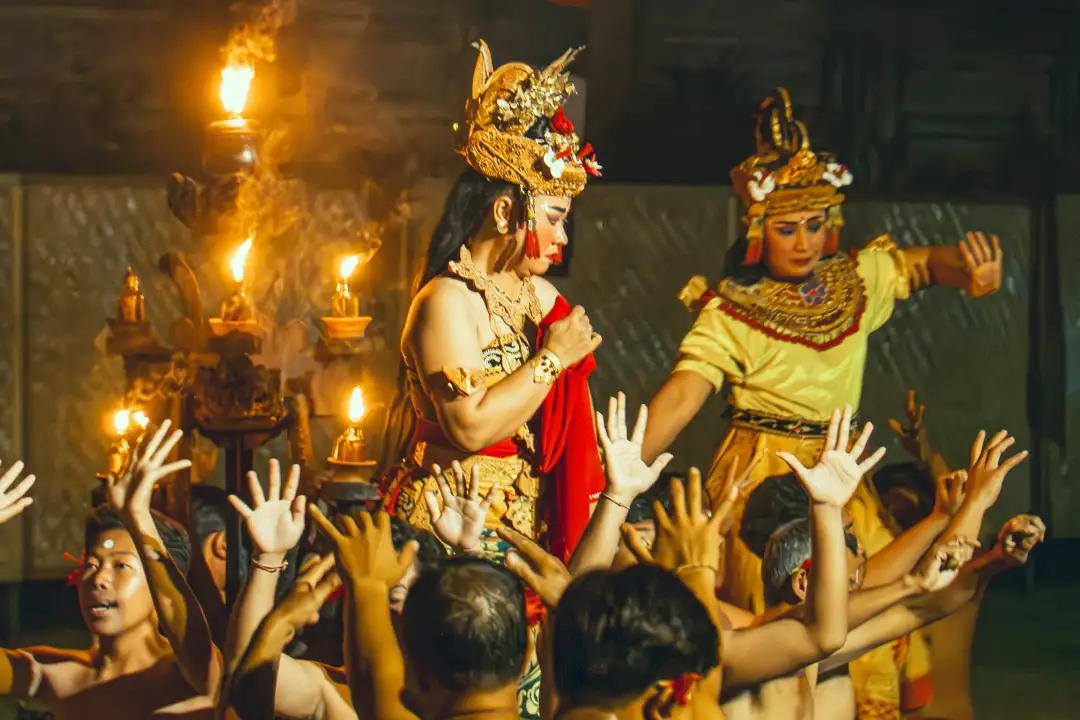
Every powerful performance needs a story.
For Kecak, that story comes through the Ramayana.
Through traditional costumes, movement, and expression, characters such as Rama, Sita, Hanuman, Jatayu, and Ravana bring themes of courage, loyalty, devotion, sacrifice, and conflict into the evening.
The story does not require visitors to know every detail before attending.
The emotions are communicated through the performers.
A gesture.
A movement.
An expression.
A moment between characters.
These details allow international visitors to connect with the narrative even if they are experiencing the Ramayana for the first time.
Within the temple setting, the story feels connected to Bali’s cultural heritage.
It is not presented as an isolated performance.
It becomes part of a wider tradition where stories continue to be shared through art and movement.
When Fire Turns the Night Into a Memory
Fire has always carried a powerful visual presence.
The movement of flames naturally attracts attention. The contrast between light and darkness creates a dramatic atmosphere that feels different from ordinary performances.
At Puseh Temple Batubulan, the Fire Dance becomes one of the strongest moments of the evening.
The flames appear within the temple surroundings.
The Kecak rhythm continues.
The performers move through the story.
The audience becomes more focused.
The entire atmosphere changes.
However, the value of fire comes from the context around it.
The Kecak Fire Dance is not only about visual excitement.
The fire represents a moment within a larger cultural journey.
The audience has already entered the temple atmosphere, connected with the rhythm, and followed the story. When fire appears, it becomes the visual expression of the energy that has been building throughout the performance.
This is what makes the moment memorable.
It is not simply fire.
It is fire surrounded by story, tradition, and place.
Sang Hyang Jaran and the Sacred Layer of Bali
Beyond Kecak and Fire Dance, the presence of Sang Hyang Jaran introduces another dimension to the evening.
Sang Hyang Jaran is a sacred Balinese dance connected to ritual movement and traditional meaning.
Its role is different from the dramatic energy of fire or the storytelling element of Kecak.
It brings a deeper cultural layer.
The performance reminds visitors that Balinese traditions are not only created for entertainment. Some expressions carry connections to spirituality, community, and inherited values.
Within the atmosphere of Puseh Temple Batubulan, Sang Hyang Jaran feels naturally connected to the surroundings.
The temple ambience creates respect.
The rhythm creates focus.
The movement creates meaning.
Together, these elements reveal a side of Bali that cannot be understood only through photographs or popular destinations.
It is a reminder that culture is something experienced, not only observed.
Living Heritage Through Performance
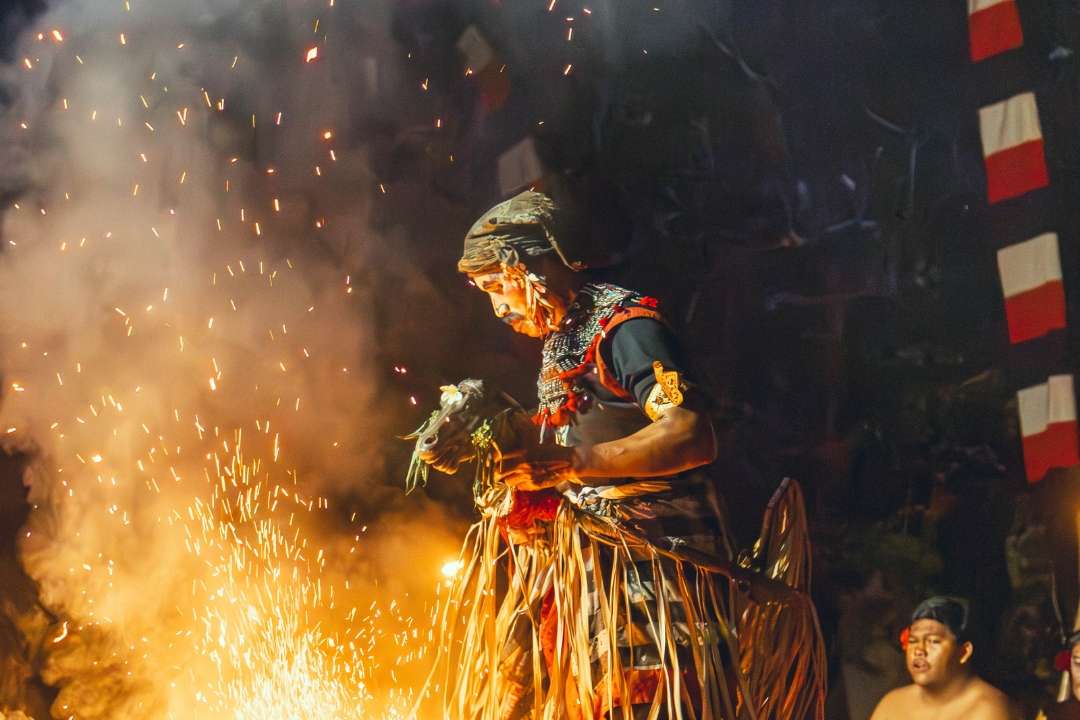
The most valuable traditions are those that continue.
A cultural practice remains alive when people continue to perform it, teach it, and share it with new generations.
This is the meaning of living heritage.
At Puseh Temple Batubulan, visitors are not looking at a tradition preserved behind glass.
They are witnessing local performers continuing a cultural expression in the present.
The voices of Kecak.
The movement of the Ramayana characters.
The energy of Fire Dance.
The sacred presence of Sang Hyang Jaran.
Each element represents a connection between the past and the present.
For travelers, this creates a more meaningful relationship with Bali.
They do not only see what the island looks like.
They experience what gives the island its identity.
More Than a Cultural Show
A cultural performance can be enjoyable because of its visuals.
But the most memorable experiences usually contain something deeper.
They create a feeling.
At Puseh Temple Batubulan, the experience is built through the relationship between:
- The temple that creates the atmosphere
- The performers who carry the tradition
- The stories that connect generations
- The fire that creates visual intensity
- The sacred movement that adds cultural depth
Together, these elements create a night where Bali’s story, fire, and sacred tradition come together.
The experience feels complete because every element has a purpose.
Nothing exists only for appearance.
The temple creates the place.
The performance creates the emotion.
The tradition creates the meaning.
Experience Bali Through Story, Fire, and Tradition
For travelers looking for a deeper cultural night, Puseh Temple Batubulan offers an opportunity to experience Bali beyond beaches, restaurants, and sightseeing.
Located in Batubulan, the temple is accessible from Denpasar, Sanur, Sukawati, Gianyar, and nearby areas.
The performance includes:
- Kecak Dance
- Ramayana storytelling
- Fire Dance
- Sang Hyang Jaran
Daily Performance
18.30–20.00 WITA
Ticket Price
IDR 150,000 per person
Discover where Bali’s story, fire, and sacred tradition come together.
Reserve your seat at Puseh Temple Batubulan and experience a cultural evening shaped by temple ambience, living heritage, and traditions that continue to inspire.

