
What Makes Kecak Dance at Puseh Temple Batubulan Feel More Authentic
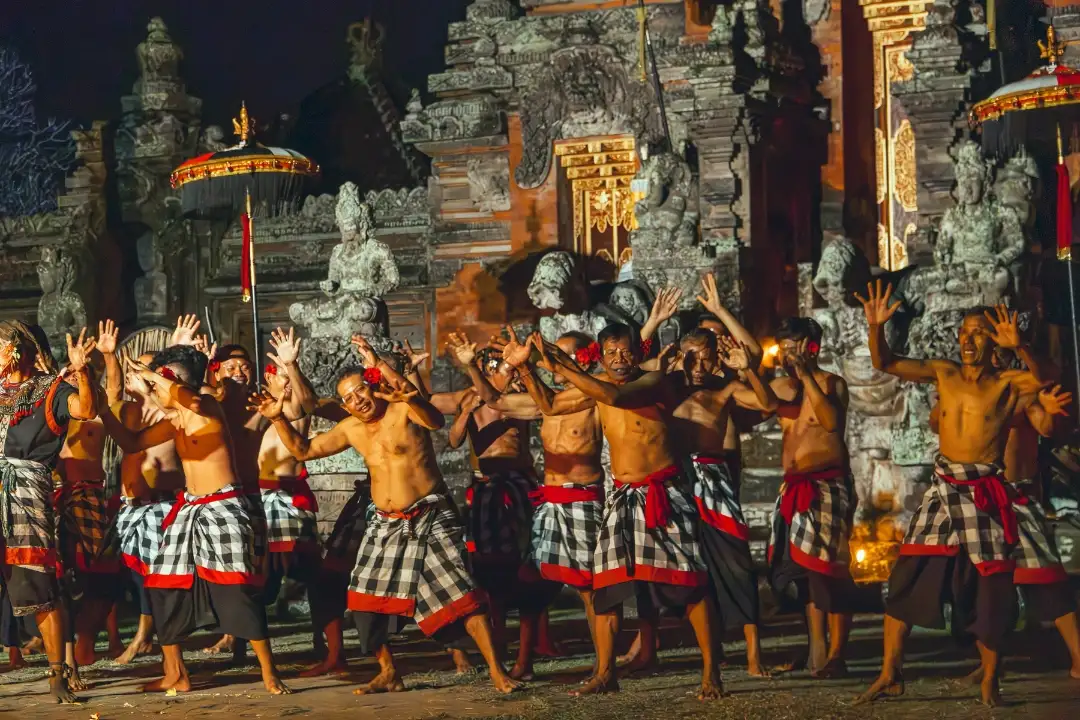
Many travelers come to Bali hoping to experience its culture, not only its landscapes. They visit temples, watch traditional performances, learn about local stories, and look for moments that feel connected to the island’s living traditions.
Kecak is often part of that journey.
However, the setting of a performance can strongly influence how the experience feels. A Kecak performance inside a conventional venue may still be visually impressive, but a performance held within a classic Balinese temple atmosphere creates a different sense of place.
At Puseh Temple Batubulan, the temple is not simply where the performance takes place. It shapes the rhythm, story, movement, fire, and overall atmosphere of the evening.
This is what makes the Kecak dance Batubulan experience feel more connected to Bali’s cultural character.
From the classic temple architecture to the circle of local performers, Ramayana storytelling, sacred rhythm, and dramatic Fire Dance, every element works together to create a more complete Balinese temple performance.
The Temple Is More Than a Background
One of the biggest differences at Puseh Temple Batubulan is the role of the temple itself.
In some performances, the venue functions only as a place for the audience to sit and watch. The stage remains the main focus, while the surrounding space has little influence on the experience.
At Puseh Temple Batubulan, the setting becomes part of the performance.
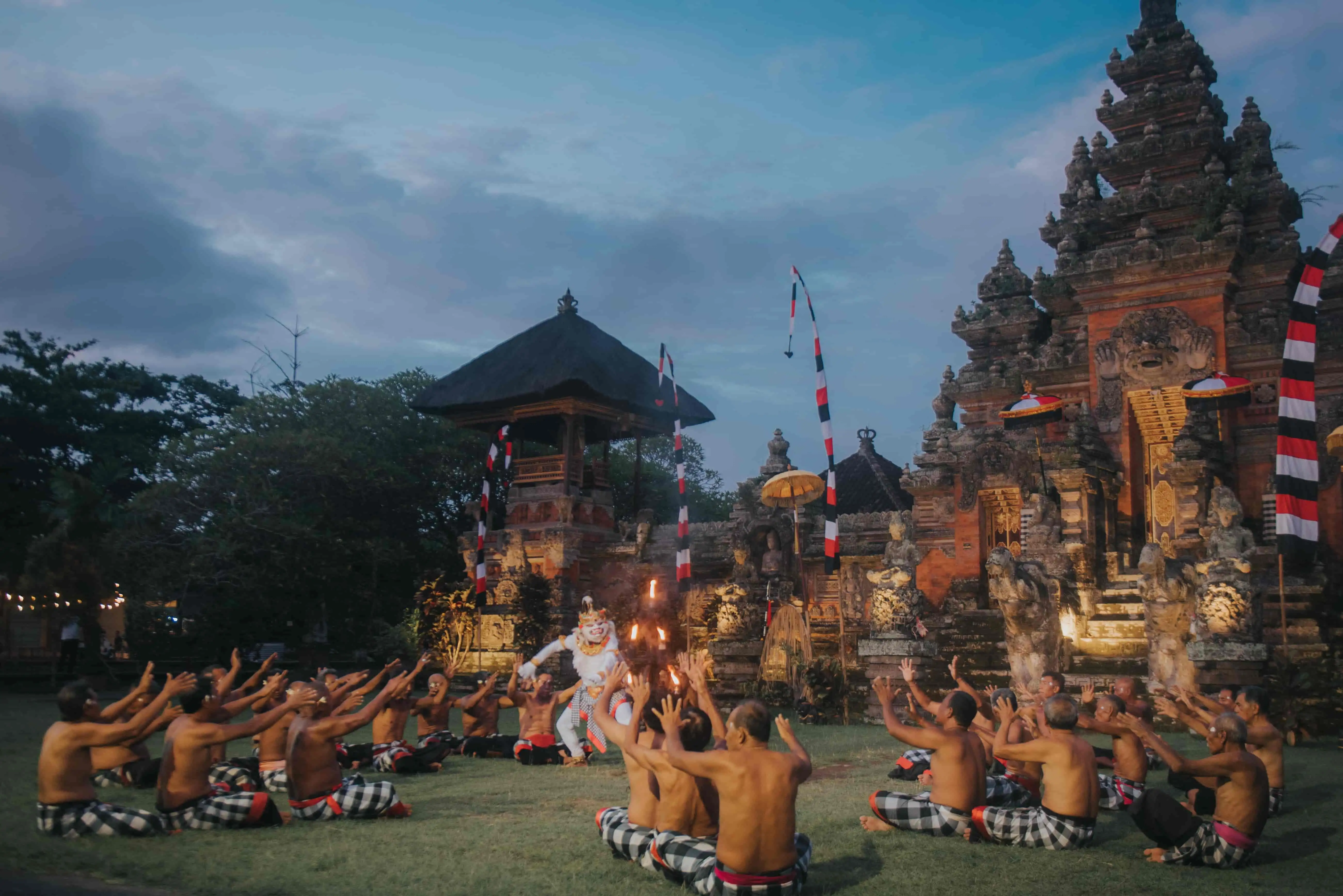
Traditional stone carvings, temple gates, classical architecture, and warm evening light surround the audience before the first Kecak rhythm begins. These visual details create a strong cultural atmosphere that cannot be separated from the scenes unfolding in front of visitors.
The temple does not need to compete with the performers. Instead, it gives context to everything happening within the space.
The Kecak circle feels more naturally connected to Balinese tradition. The Ramayana characters appear within an environment shaped by local architecture. Fire becomes more dramatic against the darker temple surroundings, while sacred moments feel more grounded in place.
This is why the classic temple setting matters.
It changes the performance from something that is simply presented to tourists into an evening that feels rooted in a recognizable Balinese cultural environment.
Classic Temple Ambience Creates a Stronger Sense of Place
Authenticity is not created by one visual element alone.
It develops through the relationship between place, people, story, movement, and atmosphere.
At Puseh Temple Batubulan, the classic ambience begins to influence visitors from the moment they arrive. Entering the temple area creates a transition from the busy road outside into a quieter cultural space.
The architecture immediately communicates that this is not a modern theatre or temporary event venue.
The stone details, temple structures, traditional layout, and evening lighting create a sense of continuity with Bali’s cultural identity. Visitors are not only waiting for a performance to begin. They are already experiencing the atmosphere of a Balinese temple.
This sense of place makes the evening more memorable.
When travelers later hear the Kecak rhythm or watch the Ramayana story unfold, those moments are connected to the surroundings. The performance feels less isolated because the environment supports its cultural meaning.
For visitors looking for an authentic Kecak Bali experience, this connection between setting and performance becomes one of the most important reasons to choose Puseh Temple Batubulan.
Local Performers Bring the Tradition to Life
A cultural performance becomes meaningful through the people who carry it.
At Puseh Temple Batubulan, local performers form the Kecak circle, portray the Ramayana characters, create the rhythm, and bring energy into the evening.
Their presence is essential.
The performance does not depend on complex stage technology or recorded sound. Much of its power comes directly from human voices, coordinated movement, expression, costume, and collective timing.
The Kecak rhythm requires performers to work as one group. Each voice contributes to the pattern surrounding the story. The characters depend on gesture and expression to communicate emotion, conflict, courage, and loyalty.
This human element makes the performance feel alive.
Visitors are not watching a cultural concept recreated through digital effects. They are witnessing local performers continue a form of storytelling through voice and movement.
That is an important part of Bali heritage.
Heritage remains living when people continue to perform it, understand it, and share it with new audiences. The performers connect the stories of the past with the visitors sitting around them in the present.
The Sacred Rhythm Gives Kecak Its Distinctive Energy
Kecak is immediately recognizable through its vocal rhythm.
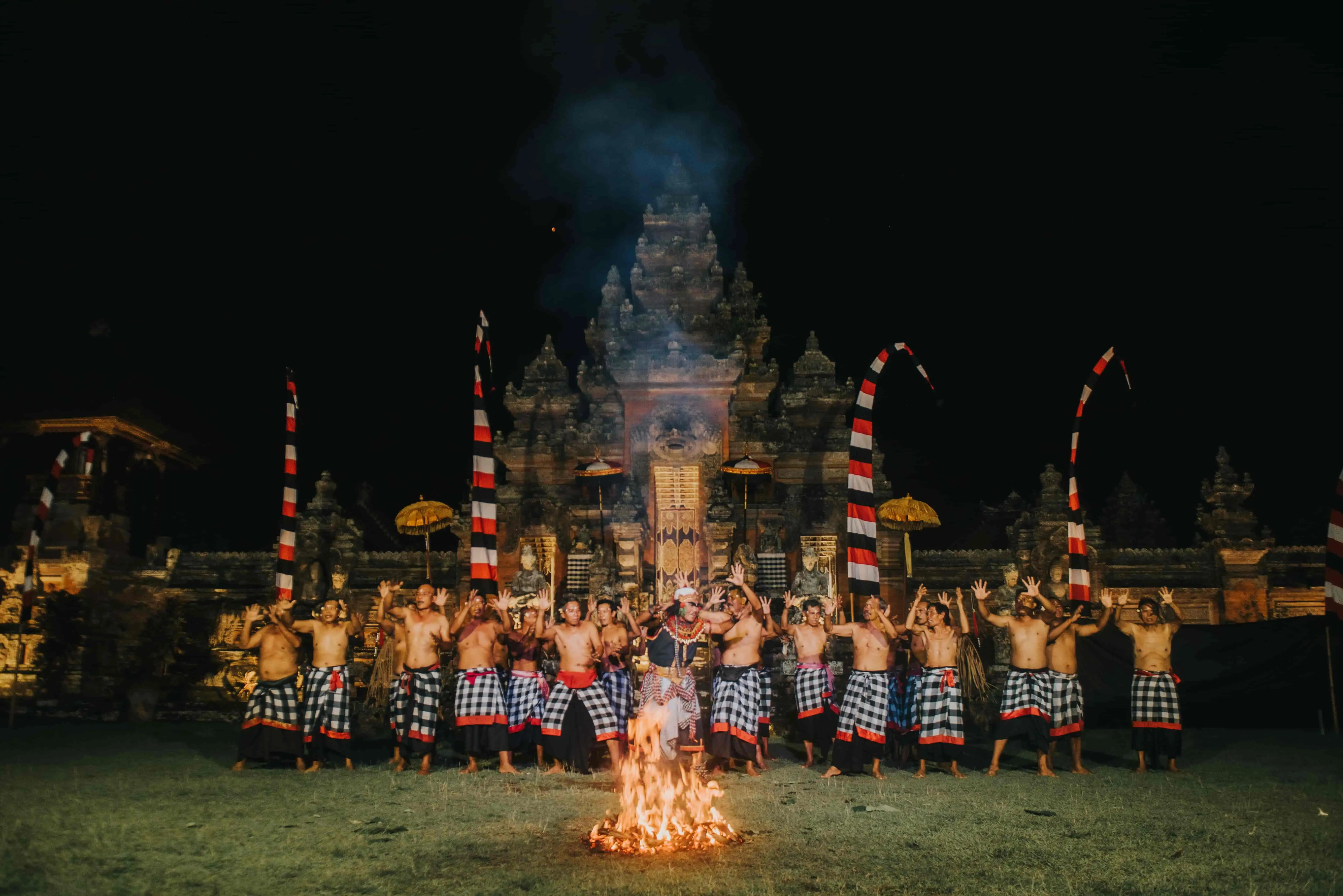
A circle of performers creates repeated sounds that build, shift, and change throughout the performance. Rather than using a conventional orchestra, the human voice becomes the foundation of the night.
At Puseh Temple Batubulan, this rhythm fills the temple atmosphere.
The voices create tension around dramatic scenes, support the movement of the characters, and establish the emotional pace of the story. At certain moments, the rhythm feels controlled and steady. At others, it becomes faster and more intense.
The temple setting strengthens this experience.
Surrounded by traditional architecture and evening ambience, the voices feel connected to the cultural space. The rhythm is not heard as background music. It becomes something the audience experiences from within.
The term sacred rhythm is especially relevant here because the sound does more than entertain. It creates atmosphere, focus, and a sense of collective energy around the performance.
This is one reason the experience feels stronger than watching Kecak in a venue where the surroundings do not carry the same cultural character.
The Ramayana Story Gives Meaning to the Performance
The Kecak rhythm creates energy, but the Ramayana gives the evening its narrative.
Through characters such as Rama, Sita, Hanuman, Jatayu, and Ravana, the performance introduces themes of courage, devotion, loyalty, sacrifice, and conflict.
The story is communicated through movement, expression, costume, and symbolic scenes rather than long explanations.
This makes the Ramayana story accessible to international visitors who may not already know its complete background. Even without understanding every detail, the audience can follow the emotional direction of the performance.
Rama’s journey creates the central narrative. Sita brings emotional depth. Hanuman adds energy and loyalty. Jatayu represents sacrifice, while Ravana brings intensity and conflict.
Within the classic temple setting, these characters feel connected to a cultural world rather than placed on a neutral stage.
The architecture, rhythm, and costumes work together to make the story feel more alive.
This connection between narrative and setting is important. The audience is not only watching traditional movement. They are following a story that has continued to influence cultural performance across generations.
Fire Dance Adds Intensity Without Replacing the Culture
Fire is one of the most visually powerful elements of the evening.
As it enters the performance, the atmosphere changes immediately. Bright flames stand out against the darker temple environment, while the Kecak rhythm continues to build around the scene.
The visual contrast creates a memorable moment.
However, the Fire Dance at Puseh Temple Batubulan is not treated as a separate spectacle with no connection to the rest of the night.
It comes after the rhythm, characters, and story have already established the cultural atmosphere. This gives the fire greater meaning.
The audience understands that the Fire Dance is part of a wider experience shaped by Kecak, Ramayana storytelling, temple ambience, and sacred tradition.
This balance is essential.
Fire provides intensity, but it does not replace the cultural foundation of the performance. It becomes a dramatic highlight within a complete Bali cultural night.
Sacred Atmosphere Makes the Experience Feel Deeper
The temple setting also changes the emotional tone of the evening.
A performance surrounded by classic Balinese architecture naturally feels different from one held in a generic entertainment venue. The temple ambience encourages visitors to pay closer attention to the cultural and sacred dimensions of the night.
The setting creates a sense of respect.
Visitors become more aware that they are experiencing something connected to Bali’s living traditions. The rhythm, movement, and storytelling feel more meaningful because they exist within a space that already carries cultural identity.
This does not mean the experience must feel overly formal or difficult to understand.
The performance remains accessible to travelers, families, couples, and groups. However, the surroundings help prevent it from feeling like entertainment alone.
It becomes a sacred performance Bali experience where visitors can appreciate both the visual beauty and cultural depth of what they are watching.
Why Puseh Temple Batubulan Feels More Authentic
The feeling of authenticity at Puseh Temple Batubulan does not come from a single claim.
It comes from the way each element supports the others.
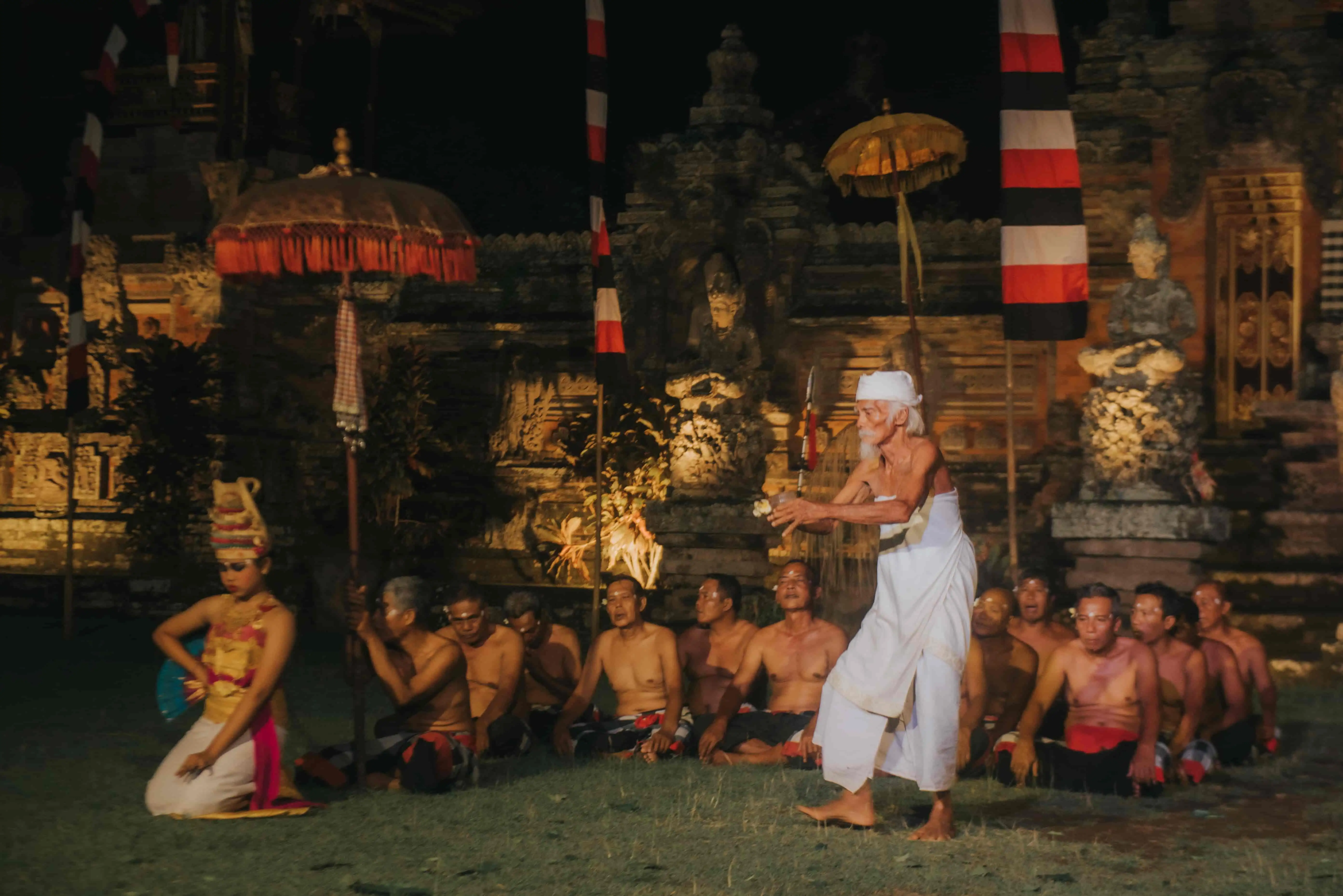
The classic temple setting creates a strong sense of place. Local performers bring the tradition to life. The sacred rhythm of Kecak surrounds the audience. The Ramayana story gives emotion and meaning to the movement. The Fire Dance adds intensity, while the wider temple atmosphere keeps the experience connected to Bali’s cultural character.
The temple is not decoration.
It is part of the reason the performance feels more complete.
For travelers looking beyond beaches, restaurants, and nightlife, this cultural evening offers a closer encounter with the island’s living heritage.
Plan Your Kecak Night in Batubulan
Puseh Temple Batubulan is located in Batubulan, making it relatively easy to reach from Denpasar, Sanur, Sukawati, Gianyar, and the route toward Ubud.
The performance is held daily from:
18.30–20.00 WITA
Ticket price:
IDR 150,000 per person
Experience Kecak, Ramayana storytelling, Fire Dance, and sacred Balinese tradition within the classic atmosphere of Puseh Temple Batubulan.
Reserve your seat and add a meaningful cultural night to your Bali itinerary.


