
What Is Sang Hyang Jaran and Why It Makes the Night More Sacred
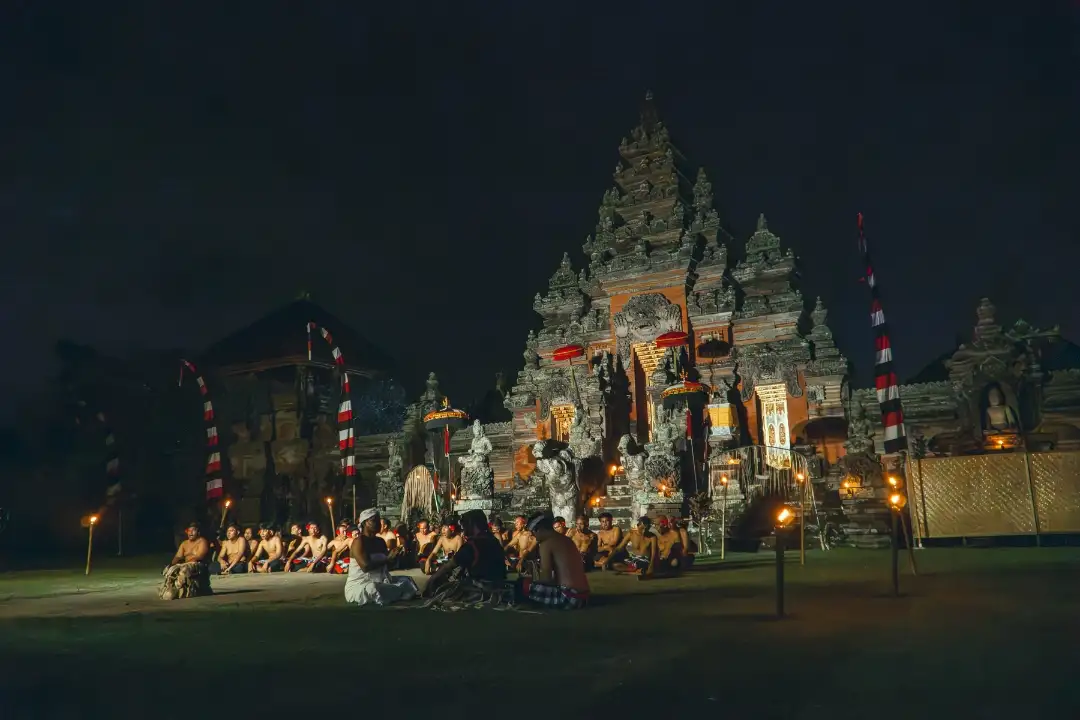
For many travelers, a Kecak performance is first remembered through its powerful circle of voices and dramatic fire-filled moments.
However, at Puseh Temple Batubulan, the evening carries another cultural element that gives the experience greater depth: Sang Hyang Jaran.
Sang Hyang Jaran is not simply an additional scene placed between Kecak and Fire Dance. It is a sacred Balinese dance connected to ritual movement, spiritual energy, and living cultural tradition.
Its presence changes the feeling of the night.
The voices of Kecak establish the rhythm. The Ramayana characters bring story and emotion. Fire raises the visual intensity. Sang Hyang Jaran then introduces a sacred layer that reminds visitors that Balinese performance can carry meaning beyond entertainment.
For travelers who want to understand Bali culture more deeply, learning about Sang Hyang Jaran can help explain why the performance at Puseh Temple Batubulan feels different from a conventional cultural show.
What Does Sang Hyang Jaran Mean?
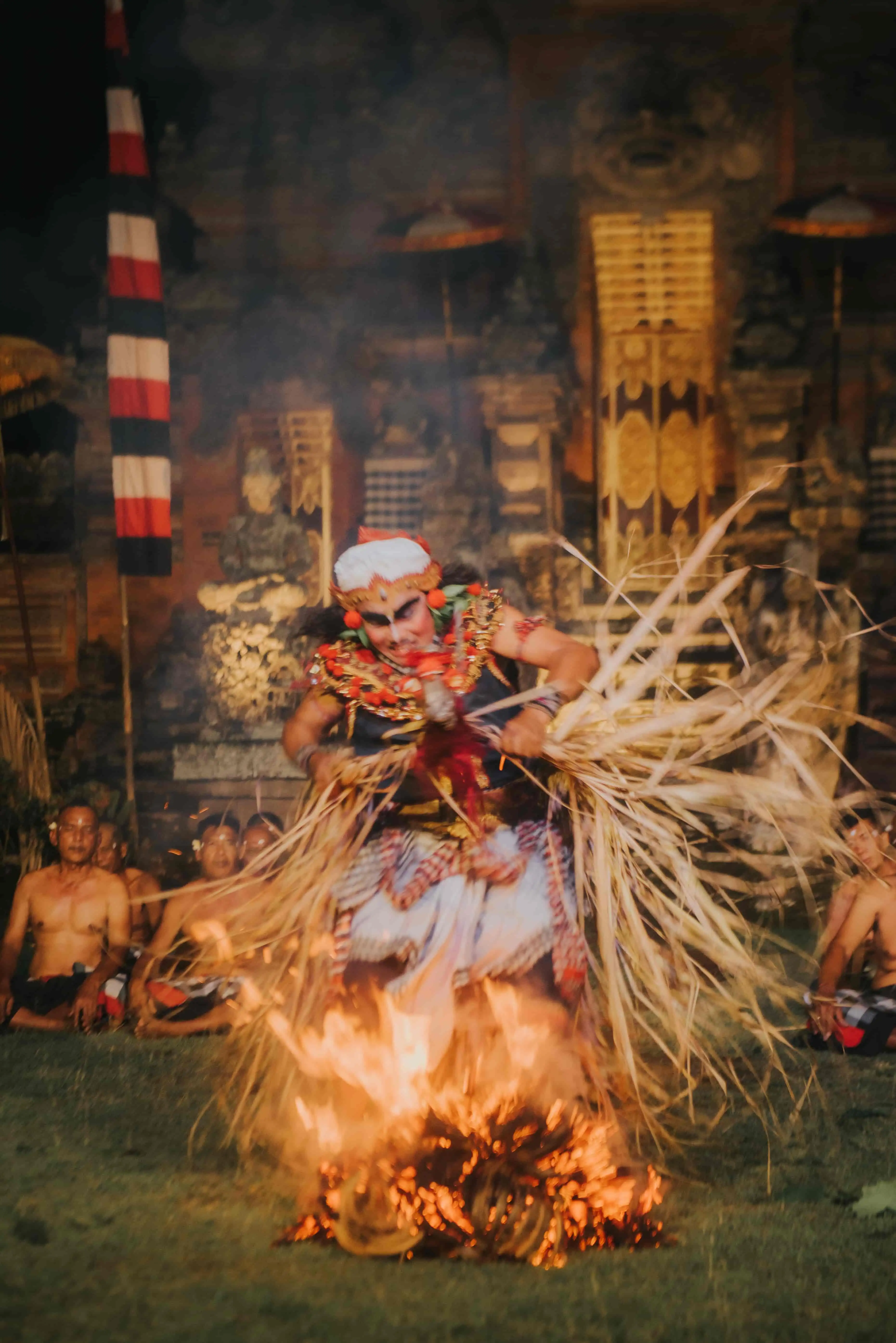
The word “jaran” means horse.
In Sang Hyang Jaran, horse symbolism becomes part of a sacred performance expressed through ritual movement, energy, and traditional cultural meaning.
For international visitors, this may first appear as a visually powerful moment involving movement and fire. However, its importance goes beyond what can be captured in a photograph or short video.
Sang Hyang Jaran belongs to a deeper layer of Balinese cultural tradition.
It should not be understood only as a fire attraction, dramatic finale, or entertainment scene. Its presence carries a sacred character that deserves attention and respect.
This is why it becomes one of the defining elements of the night at Puseh Temple Batubulan.
The performance introduces visitors not only to the recognizable rhythm of Kecak, but also to a form of Balinese ritual dance connected to spiritual and cultural values.
A Sacred Dance Rather Than a Visual Gimmick
When fire appears in a performance, it naturally captures attention.
The light, movement, contrast, and intensity create a strong visual moment. For this reason, it can be easy for visitors to focus only on the dramatic appearance of Sang Hyang Jaran.
However, reducing it to a visual attraction would remove the meaning that makes it important.
Sang Hyang Jaran is a sacred Balinese dance. Its ritual movement and spiritual character give the evening greater cultural depth.
The performance is not presented simply to create surprise. It forms part of a wider cultural atmosphere shaped by the temple, local performers, Kecak rhythm, Ramayana storytelling, and fire.
At Puseh Temple Batubulan, these elements are not separated into unrelated attractions.
They work together.
The classic temple ambience creates a strong sense of place. The voices of Kecak surround the performance with rhythm. Fire adds intensity, while Sang Hyang Jaran introduces a more sacred emotional layer.
This relationship is what makes the evening feel complete.
Understanding Spiritual Energy Without Making It Mystical
The idea of spiritual energy Bali can sometimes be explained in ways that feel exaggerated, mysterious, or difficult for visitors to understand.
That approach is not necessary.
Sang Hyang Jaran can be introduced respectfully through the atmosphere it creates and the cultural values it represents.
Its spiritual character can be felt through ritual movement, collective focus, the rhythm of local performers, the presence of fire, and the classic temple surroundings.
The energy of the moment does not need to be described as frightening or supernatural.
Instead, it can be understood as a deeper sense of attention, tradition, and sacred meaning within the performance.
When Sang Hyang Jaran begins, the emotional tone of the evening changes. The audience often becomes more focused. The relationship between movement, rhythm, and fire feels more intense.
This is the spiritual layer of the performance.
It is not about creating fear or mystery. It is about recognizing that the dance carries cultural meaning beyond visual entertainment.
How Kecak Builds the Atmosphere Around Sang Hyang Jaran
Before Sang Hyang Jaran appears, the voices of Kecak have already established the energy of the night.
A circle of local performers creates a coordinated vocal rhythm without a conventional orchestra. Their voices rise, fall, repeat, and shift together, forming the foundation of the performance.
This rhythm is essential.
It surrounds the Ramayana story, supports the movement of the characters, and builds anticipation throughout the evening.
When Sang Hyang Jaran enters the performance, the Kecak rhythm continues around the sacred moment.
The voices create a powerful sense of collective energy. Instead of appearing alone, Sang Hyang Jaran becomes part of an atmosphere shaped by many performers working together.
This is one reason Kecak Fire Dance Bali feels especially powerful within a temple setting.
The rhythm is not played from speakers or separated from the action. It is created live by people sitting around the performance.
The audience hears the voices from within the cultural space, making the moment feel closer and more immediate.
The Relationship Between Sang Hyang Jaran and Fire
Fire is one of the strongest visual elements of the evening.
Against the darker temple surroundings, it immediately raises the intensity of the performance. The moving light, traditional setting, and Kecak rhythm create a dramatic contrast.
However, the relationship between Sang Hyang Jaran and fire should not be understood only through spectacle.
The fire adds visual power, but the sacred meaning of the dance remains central.
This distinction is important when discussing any fire performance Bali experience.
A performance can include fire simply to entertain an audience. At Puseh Temple Batubulan, fire exists within a wider cultural context.
It appears alongside ritual movement, sacred tradition, Kecak rhythm, Ramayana storytelling, local performers, and classic temple ambience.
Fire strengthens the moment, but it does not replace its meaning.
This balance allows visitors to appreciate the visual intensity while still understanding that Sang Hyang Jaran is connected to a deeper cultural tradition.
Why the Temple Setting Matters
Sang Hyang Jaran would feel different if it were presented in a generic theatre or modern event space.
At Puseh Temple Batubulan, the classic temple atmosphere shapes how visitors experience the performance.
Traditional stone carvings, temple gates, heritage architecture, and warm evening light surround the audience before the first voices begin.
The temple is not only a background.
It creates cultural context for the rhythm, movement, story, and fire that follow.
When Sang Hyang Jaran appears within this environment, the sacred character of the dance feels more naturally connected to place.
The audience is not watching an isolated scene placed on a neutral stage. They are experiencing it within a space that already carries Balinese cultural identity.
This is one of the reasons the evening feels more meaningful.
Temple ambience helps visitors understand that the performance belongs to a wider cultural world shaped by tradition, community, art, and spirituality.
Sang Hyang Jaran as Living Balinese Culture
Cultural heritage does not remain alive simply because it is documented or displayed.
It remains alive when people continue to practise, perform, understand, and share it.
Sang Hyang Jaran represents this idea of living culture.
The dance connects inherited tradition with a present-day audience. Local performers carry its movement and atmosphere into the evening, allowing visitors to encounter a cultural practice that continues to hold meaning.
This does not turn the performance into a museum display.
It remains active, emotional, and connected to the people performing it.
For travelers, this creates an important opportunity.
Instead of experiencing Bali only through beaches, restaurants, cafés, and scenic destinations, they can spend an evening closer to the island’s cultural identity.
Sang Hyang Jaran shows that Bali’s traditions are not only stories from the past. They continue through movement, performance, sacred spaces, and community participation.
Why Sang Hyang Jaran Makes the Night Feel More Sacred
The evening at Puseh Temple Batubulan contains several memorable elements.
The temple ambience creates the setting. The Kecak circle establishes the rhythm. The Ramayana characters introduce story and emotion. Fire creates a dramatic visual highlight.
Sang Hyang Jaran adds something different.
It brings ritual movement, spiritual energy, and sacred cultural meaning into the experience.
Without it, the night would still offer a powerful Kecak and Fire Dance performance. With it, the evening gains another layer that encourages visitors to look beyond spectacle.
It reminds the audience that Balinese performance can be closely connected to spiritual values and living heritage.
This is why Sang Hyang Jaran should not be treated as a small supporting element.
It is one of the strongest reasons Puseh Temple Batubulan offers a different cultural evening in Bali.
Experience Sang Hyang Jaran With Respect
Visitors do not need extensive cultural knowledge before watching Sang Hyang Jaran.
Curiosity, attention, and respect are enough to begin.
Watch how the movement changes the atmosphere. Listen to the Kecak voices surrounding the moment. Notice how the fire interacts with the temple setting and how the audience responds when the sacred performance begins.
These details help reveal why Sang Hyang Jaran carries a different emotional weight.
The experience is not intended to create fear or confusion.
It offers an opportunity to encounter a sacred part of Bali’s cultural tradition in a way that is visual, accessible, and meaningful.
Discover the Sacred Side of the Night
At Puseh Temple Batubulan, Sang Hyang Jaran comes together with Kecak, Ramayana storytelling, Fire Dance, and classic temple ambience in one cultural evening.
The performance takes place daily from:
18.30–20.00 WITA
Ticket price:
IDR 150,000 per person
Located in Batubulan, the temple is relatively easy to reach from Denpasar, Sanur, Sukawati, Gianyar, and the route toward Ubud.
Experience the rhythm of Kecak, the visual intensity of fire, and the sacred presence of Sang Hyang Jaran within a classic Balinese temple atmosphere.
Reserve your seat at Puseh Temple Batubulan and discover a deeper side of Bali through ritual movement, story, fire, and living culture.


