
The Story Behind Kecak Dance and Ramayana at Puseh Temple Batubulan

For many visitors watching Kecak for the first time in Bali, the experience is immediately memorable.
The sound of hundreds of voices moving together.
The circle of performers creating powerful rhythm.
The traditional costumes and dramatic movements.
The fire that changes the atmosphere of the evening.
But behind the visual beauty of Kecak, there is a story that gives the performance its meaning.
The story comes from the Ramayana, an ancient epic that has become an important part of Balinese performing arts and cultural expression.
At Puseh Temple Batubulan, the Ramayana is not simply explained through words. It comes alive through movement, expression, costumes, and the connection between performers and the temple atmosphere.
For visitors searching for a deeper Ramayana Kecak Bali experience, understanding the characters behind the performance can make the evening much more meaningful.
The performance is not only about watching a traditional dance.
It is about following a story of courage, loyalty, devotion, sacrifice, and conflict that continues to inspire audiences through generations.
Why the Ramayana Is Important in Kecak Performance
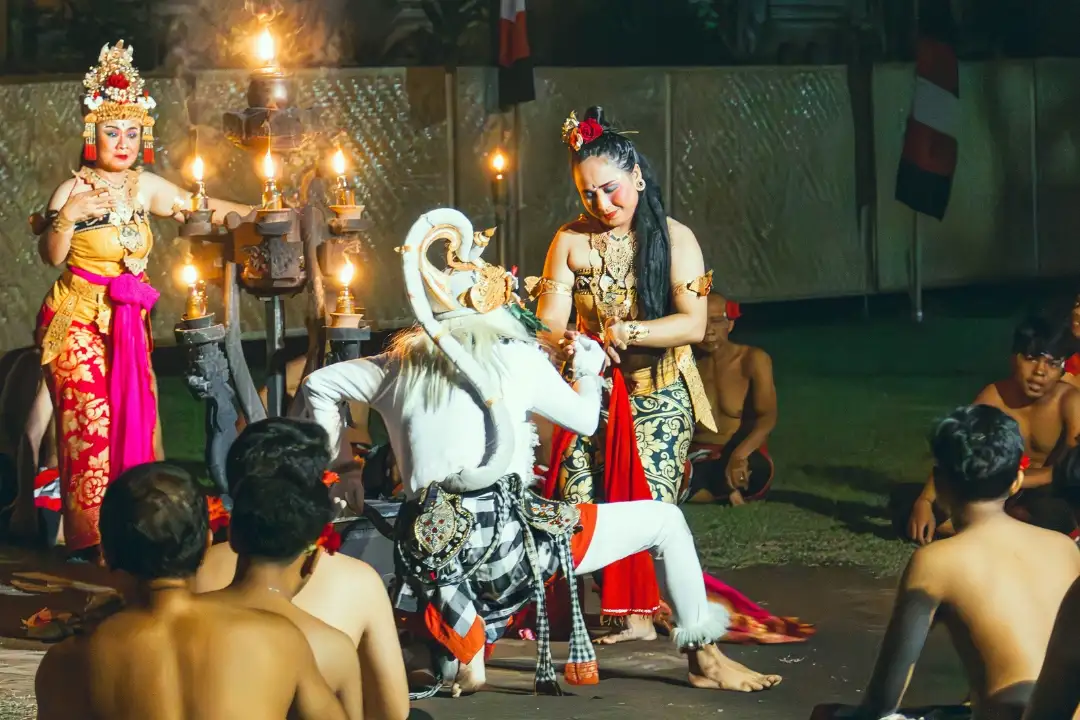
The Ramayana provides the foundation of many Kecak performances in Bali.
The story follows the journey of Rama, a prince known for his courage and devotion, as he faces challenges after Sita is taken away by Ravana.
Through the journey, the story introduces themes that remain meaningful today:
- Loyalty between friends and allies
- The strength of devotion
- The importance of courage
- The struggle between good and conflict
- Sacrifice for something greater
In Kecak, the story is communicated differently from a regular theatre performance.
There is no need for long dialogue or complicated explanations.
Instead, performers use movement, facial expressions, costumes, and interaction to help the audience understand the emotions and relationships between characters.
This makes the performance accessible for international visitors, even those experiencing the Ramayana for the first time.
The rhythm of Kecak creates the atmosphere, while the characters bring the story to life.
Rama The Symbol of Courage and Devotion
Rama is one of the central figures in the Ramayana story.
He represents courage, responsibility, and devotion.
Within the Kecak performance, Rama’s character is often shown through confident movement and calm expressions. His presence represents a figure who continues moving forward despite difficult challenges.
The story of Rama is not only about strength.
It is also about commitment.
His journey reflects the importance of staying true to responsibility and values even during challenging moments.
For visitors watching the performance, Rama helps introduce the main direction of the story.
He becomes the character audiences follow as the conflict develops and the journey unfolds.
Through movement and expression, performers communicate Rama’s character without requiring detailed explanation.
A gesture, a posture, or an interaction with other characters can reveal his role within the story.
This is what makes the Kecak dance story powerful.
The audience does not only hear the story.
They see it through the performers.
Sita The Character Behind the Emotional Journey
Sita brings another important emotional element to the Ramayana.
She represents grace, strength, and devotion.
Although Sita is often remembered as the character who creates the central conflict of the story after being taken by Ravana, her role is much deeper than simply being part of the problem.
She represents emotional strength during difficult circumstances.
In Kecak performance, Sita’s character is communicated through expression and movement.
Her gestures, interactions, and presence help the audience understand the emotional side of the story.
She brings balance to the stronger action elements of the performance.
While Rama represents the journey and responsibility, Sita represents the emotional heart of the story.
This connection helps visitors understand that the Ramayana is not only about battles and conflict.
It is also about relationships, loyalty, and personal strength.
Hanuman The Energy That Captures Attention
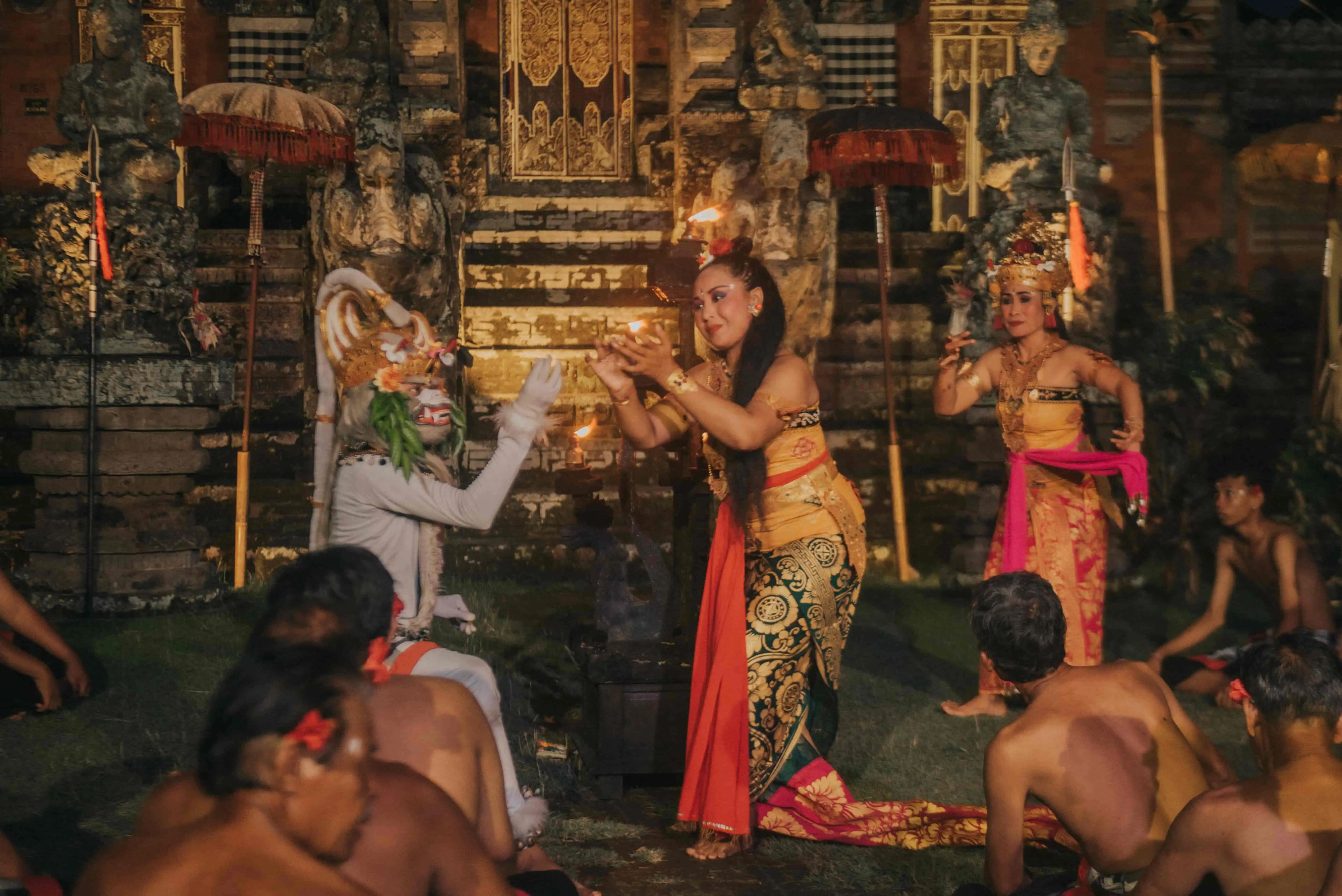
Among all Ramayana characters, Hanuman is often one of the most memorable for visitors.
Known for his loyalty, courage, and powerful energy, Hanuman brings a different atmosphere into the performance.
His movements are often more dynamic and expressive.
The character’s physical expression, gestures, and interaction with other performers create some of the most engaging moments of the show.
For many international visitors, Hanuman becomes one of the easiest characters to recognize because of his distinctive appearance and energetic movement.
However, his importance goes beyond appearance.
Hanuman represents loyalty and dedication.
His actions in the Ramayana show the importance of helping others and remaining committed to a purpose.
Within the Kecak performance, Hanuman adds excitement while also carrying one of the strongest messages of the story.
His character connects the audience emotionally with the journey of Rama and Sita.
Jatayu The Meaning of Sacrifice
Jatayu is another important character within the Ramayana story.
Although his role may be shorter compared to Rama or Hanuman, his meaning is significant.
Jatayu represents courage and sacrifice.
In the story, Jatayu attempts to help Sita when she is taken by Ravana. His action shows bravery despite knowing the challenge he faces.
Within the performance, Jatayu’s movement and interaction communicate this sense of determination.
The character reminds audiences that courage is not only shown by those who achieve victory.
Sometimes courage is shown by those who stand for what they believe is right, even in difficult situations.
For visitors unfamiliar with the Ramayana, Jatayu introduces an important emotional lesson within the story.
He shows that every character contributes meaning, even those who appear only during certain moments.
Ravana The Character Behind the Conflict
Every powerful story needs conflict.
In the Ramayana, Ravana creates that challenge.
Ravana is the king of Lanka and the character who takes Sita, creating the central conflict that drives Rama’s journey.
In Kecak performance, Ravana is often portrayed through strong expressions, dramatic movement, and a powerful presence.
His character creates tension within the story.
Without conflict, there would be no journey.
Without challenges, the courage and loyalty of other characters would not become visible.
Ravana’s role helps create the dramatic structure of the performance.
For visitors watching the show, his presence makes the story easier to follow because the emotional contrast between characters becomes clearer.
He represents the opposing force that Rama and his allies must face.
How Movement and Expression Tell the Story
One of the most interesting parts of Kecak is that the story is communicated mostly through visual expression.
The performers use:
- Body movement
- Facial expressions
- Traditional costumes
- Character interaction
- Symbolic gestures
These elements allow the audience to understand the emotions behind each scene.
A character’s posture can show confidence.
A movement can represent conflict.
A facial expression can communicate fear, determination, or sadness.
This style of storytelling is especially important because many visitors watching Ramayana Kecak Bali may not speak the local language or know the complete story beforehand.
The performance creates a universal connection through visual storytelling.
The audience follows emotions first.
Then they begin to understand the story.
This is one of the reasons Kecak remains accessible to travelers from around the world.
When the Ramayana Comes Alive Inside a Temple
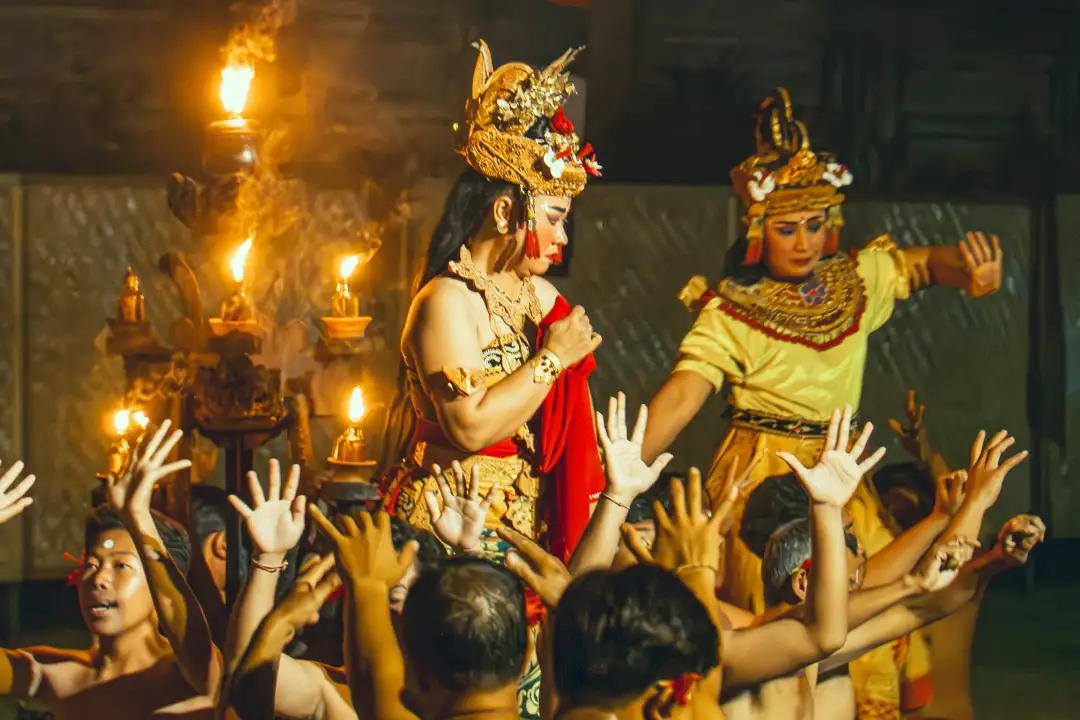
The location of the performance adds another important layer.
At Puseh Temple Batubulan, the Ramayana story is performed within a classic Balinese temple atmosphere.
The temple is not only a place where visitors sit and watch.
It becomes part of the experience.
Traditional architecture, evening lighting, and the cultural atmosphere surrounding the performance create a stronger connection between the story and its setting.
The characters do not appear on a simple stage disconnected from Bali.
They move within an environment shaped by Balinese heritage.
The Kecak rhythm fills the temple atmosphere.
The Ramayana characters bring the story forward.
The audience becomes part of the cultural evening.
This combination creates a feeling that the story is not only being performed.
It is being experienced.
More Than a Dance It Is a Living Story
A strong cultural performance does not only preserve the past.
It keeps traditions alive in the present.
At Puseh Temple Batubulan, the Ramayana continues through local performers who bring the characters, movements, and emotions to new audiences every evening.
The story remains meaningful because its themes are universal.
Courage.
Loyalty.
Devotion.
Sacrifice.
Conflict.
These ideas continue to connect with visitors from different backgrounds.
This is why a Kecak performance is more than a traditional dance.
It is a living story shared through voices, movement, and cultural expression.
Experience the Ramayana Kecak Story at Puseh Temple Batubulan
For travelers who want to understand Bali beyond beaches, restaurants, and landscapes, experiencing the Ramayana through Kecak offers a deeper connection with the island’s culture.
At Puseh Temple Batubulan, visitors can experience:
- Kecak Dance
- Ramayana storytelling
- Fire Dance
- Sang Hyang Jaran
- Classic Balinese temple atmosphere
Daily Performance
18.30–20.00 WITA
Ticket Price
IDR 150,000 per person
Discover the story behind Rama, Sita, Hanuman, Jatayu, and Ravana through movement, expression, rhythm, and traditional performance.
Reserve your seat at Puseh Temple Batubulan and experience how an ancient story continues to live through Bali’s cultural heritage.
