
The Fire Moment That Tourists Always Remember in Batubulan
Some travel memories begin with a landscape.
Others begin with a sound, a sudden change in atmosphere, or a visual moment that lasts only a few seconds but remains clear long after the journey ends.
At Puseh Temple Batubulan, that moment often begins when fire enters the performance.
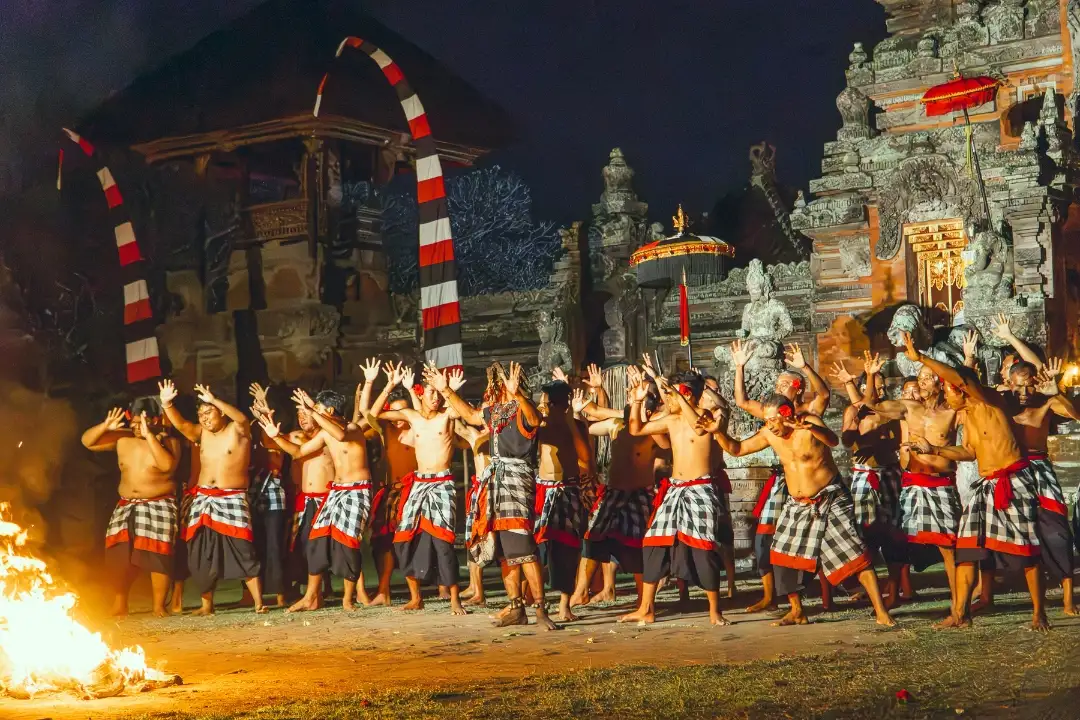
The evening starts with the classic ambience of a Balinese temple. A circle of local performers builds the Kecak rhythm. Characters from the Ramayana bring story and emotion into the night. Then, as the performance grows more intense, fire changes everything.
The temple becomes brighter. The rhythm feels stronger. The audience becomes more focused.
For many visitors searching for a memorable Fire Dance Bali experience, this becomes the scene they remember most clearly.
However, the fire at Puseh Temple Batubulan is not presented as a separate attraction created only for dramatic effect. It belongs to a wider cultural evening shaped by Kecak, Ramayana storytelling, temple ambience, local performers, and the sacred presence of Sang Hyang Jaran.
That context is what makes the fire moment feel more powerful.
Why Fire Immediately Captures Attention

Fire naturally draws the eye.
Its movement is unpredictable. Its light changes the atmosphere around it. Against a darker evening setting, every flame becomes more visible and dramatic.
At Puseh Temple Batubulan, the effect is even stronger because the performance takes place within a classic Balinese temple atmosphere.
Traditional stone carvings, temple gates, heritage architecture, and warm night lighting surround the performance. When fire appears, it creates a powerful contrast with the darker temple setting.
The audience is no longer watching only movement and costume.
They are watching light transform the entire space.
This is why the Fire Dance often becomes the strongest visual hook of the evening. Even visitors who arrive knowing little about Kecak or the Ramayana immediately understand that something important is happening.
The fire signals a shift.
The rhythm becomes more intense. The visual energy rises. Attention moves toward the centre of the performance.
It becomes the moment when the night feels fully alive.
The Fire Moment Is Built Long Before the Flames Appear
The power of the Fire Dance does not come from fire alone.
It comes from everything that happens before it.
The audience first enters the temple atmosphere. The surroundings create a sense of place and prepare visitors for a cultural experience rather than a conventional entertainment show.
Then the voices begin.
A circle of local performers creates the distinctive Kecak rhythm through coordinated human voices. The sound builds gradually, surrounding the characters and guiding the emotional direction of the performance.
The Ramayana story then introduces conflict, courage, loyalty, and movement through characters such as Rama, Sita, Hanuman, Jatayu, and Ravana.
By the time fire enters the night, the audience is already connected to the rhythm and story.
This is why the Kecak Fire Dance feels more meaningful than a random fire attraction.
The flames arrive at a point when the atmosphere has already been carefully built. They become the visual climax of a cultural narrative rather than an isolated performance designed only to create surprise.
Without the Kecak rhythm, the fire would lose part of its energy.
Without the Ramayana story, it would lose emotional context.
Without the temple ambience, it would lose the strong sense of place that makes the moment feel distinctly Balinese.
Fire Looks Different Inside a Classic Temple
The setting changes how visitors remember the performance.
Fire in a modern theatre may still look dramatic, but fire inside a classic Balinese temple creates a different visual experience.
At Puseh Temple Batubulan, the flames move against stone architecture, traditional gates, dark evening skies, and the circle of performers.
The temple is not only a background behind the scene.
It shapes the mood of the entire Bali performance.
The contrast between natural fire and traditional architecture creates a scene that feels cinematic without relying on a modern stage design. The surroundings already carry cultural character, allowing the fire to feel connected to the place rather than added on top of it.
This is one of the reasons visitors often remember not only the flames, but also where they saw them.
The fire becomes inseparable from the temple atmosphere.
When travelers later describe the experience, they may remember the voices around the scene, the shadows moving across the stone, the traditional costumes, and the way the temple seemed to change under the light of the flames.
The memory is not simply “I watched a fire show.”
It becomes “I watched fire transform a Kecak night inside a Balinese temple.”
More Than a Moment for Photos
The Fire Dance is visually strong, making it naturally attractive for photographs and video.
Visitors often raise their phones when the flames appear. The contrast, movement, and intensity create a moment that looks powerful on camera.
However, the strongest part of the experience cannot be fully captured through a screen.
A video may record the fire, but it cannot reproduce the full atmosphere.
It cannot completely capture the circle of voices surrounding the scene, the warmth of the night, the temple architecture, the audience’s reaction, or the emotional build-up from the earlier parts of the performance.
This is why the fire moment often feels more powerful in person.
It engages several senses at once.
You see the flames. You hear the Kecak rhythm. You notice the movement of the performers. You feel the audience becoming quieter and more focused.
The experience is physical, emotional, and visual.
That is what turns it from a social media moment into a cultural memory.
The Connection Between Fire and Sang Hyang Jaran
The presence of Sang Hyang Jaran gives the fire another layer of meaning.
Sang Hyang Jaran is a sacred Balinese dance connected to ritual movement, spiritual energy, and cultural tradition. The word “jaran” means horse, and the dance carries symbolic movement within the sacred atmosphere of the night.
This element is important because it prevents the fire from becoming only a visual gimmick.
At Puseh Temple Batubulan, fire exists within a wider cultural context.
It is connected to the voices of Kecak, the temple setting, local performers, sacred movement, and living Balinese heritage.
Sang Hyang Jaran changes the emotional character of the fire moment.
The flames remain visually dramatic, but the atmosphere becomes more focused and respectful. The audience is reminded that the performance carries cultural meaning beyond entertainment.
This balance is essential.
The fire captures attention, while Sang Hyang Jaran gives the night deeper cultural weight.
Together, they create a moment that feels visually intense without losing its sacred character.
Why Visitors Remember the Audience Reaction Too

Sometimes, the most powerful part of a performance is not only what happens in the centre.
It is the way the audience responds.
When the fire appears, conversations usually stop. Attention becomes more focused. Visitors who may have been casually observing the earlier scenes become fully engaged.
The entire space feels more concentrated.
This shared reaction becomes part of the memory.
Couples, families, solo travelers, and tour groups may come from different countries and arrive with different expectations, but the fire moment brings everyone into the same experience.
For a short time, the audience watches together.
This collective attention gives the night additional energy.
A strong cultural show does not only present something to the audience. It creates a moment in which the audience becomes emotionally present.
At Puseh Temple Batubulan, the Fire Dance often becomes that moment.
The Fire Is Memorable Because It Belongs to a Bigger Story
Fire may be the visual scene visitors remember first, but it is not the only reason the evening feels meaningful.
The full experience is created through several connected elements.
The temple ambience establishes the setting.
The Kecak rhythm builds energy.
The Ramayana characters introduce story and emotion.
Fire creates the visual climax.
Sang Hyang Jaran adds sacred cultural depth.
Each part strengthens the next.
This is what makes the night feel more complete than a short fire attraction or standard stage performance.
The fire becomes memorable because it belongs to a bigger story.
It represents the moment when the energy of the evening reaches its strongest point, but the temple, voices, characters, and sacred movement give that moment meaning.
For visitors, the memory remains powerful because it is connected to a full cultural experience rather than a single visual trick.
A Different Kind of Bali Night
Many evenings in Bali are built around sunset, dinner, cafés, beach clubs, or nightlife.
A cultural evening offers something different.
It gives travelers an opportunity to experience the island through rhythm, story, local performance, temple architecture, fire, and sacred tradition.
Located in Batubulan Bali, Puseh Temple Batubulan is relatively easy to reach from Denpasar, Sanur, Sukawati, Gianyar, and the route toward Ubud.
This makes the performance practical to include after a daytime journey.
Visitors can explore Bali during the day, attend the show in the evening, and continue to dinner afterward.
The cultural experience does not need to replace the rest of the itinerary.
It can become the moment that gives the entire day a more memorable ending.
Experience the Fire Within the Full Cultural Night
The Fire Dance at Puseh Temple Batubulan is visually powerful, but its real impact comes from the atmosphere around it.
The classic temple setting creates the mood. The voices of Kecak build anticipation. The Ramayana story gives emotional context. Sang Hyang Jaran brings sacred depth.
Then fire transforms the night.
Daily Performance
18.30–20.00 WITA
Ticket Price
IDR 150,000 per person
Experience Kecak, Fire Dance, and Sang Hyang Jaran within the classic atmosphere of Puseh Temple Batubulan.
Come for the visual power of fire, but stay for the story, sacred rhythm, temple ambience, and living culture that make the moment worth remembering.
Reserve your seat and add a different cultural experience to your Bali night.


