
Kecak Fire Dance and Sang Hyang Jaran Explained for First Time Visitors

For many travelers visiting Bali for the first time, a traditional performance can feel exciting but also unfamiliar.
You may have seen photos of people sitting in a circle, heard about the famous Kecak rhythm, or watched videos of fire performances inside a Balinese temple.
But what actually happens during the show?
What makes Kecak different from other cultural performances?
Why does fire become such an important moment?
And what is the meaning behind Sang Hyang Jaran?
At Puseh Temple Batubulan, visitors can experience these three important elements together through a complete Bali cultural performance featuring Kecak, Fire Dance, and Sang Hyang Jaran.
For first-time visitors, understanding these elements before arriving can make the evening more meaningful.
Instead of simply watching a show, you can recognize the story, rhythm, atmosphere, and cultural value behind each part of the performance.
A First Look at Bali’s Cultural Performance

Bali is known around the world for its landscapes, beaches, temples, and traditional arts.
However, one of the most memorable ways to understand the island is through its performances.
Traditional Balinese performances often combine storytelling, music, movement, costumes, and cultural symbolism. They are not only created to entertain audiences but also to share stories and traditions that continue through generations.
A visit to a Bali temple show offers a different perspective.
The experience connects visitors with Bali through local performers, traditional stories, and the atmosphere of a cultural space.
At Puseh Temple Batubulan, the performance takes place within a classic Balinese temple setting. The architecture, evening atmosphere, and traditional surroundings become part of the experience.
For travelers planning their first time Bali journey, this creates an accessible introduction to the island’s cultural identity.
1. Kecak Rhythm: The Voice That Creates the Atmosphere
The first element visitors usually notice is Kecak.
Unlike many performances that rely on musical instruments, Kecak is built around human voices.
A circle of local performers creates a coordinated rhythm through repeated vocal patterns. The sound rises and changes throughout the performance, creating energy, tension, and emotion around the story.
This is the signature of Kecak Fire Dance Bali.
The rhythm becomes the foundation of the evening.
It supports the Ramayana story, creates atmosphere, and connects the audience with the performers. Instead of hearing music from a distance, visitors experience the sound being created live by the people around them.
Inside Puseh Temple Batubulan, the effect becomes stronger.
The traditional temple surroundings allow the voices to feel connected to the space. The rhythm fills the evening atmosphere, surrounding the characters and guiding the audience through the performance.
For first-time visitors, this is often the moment when they understand why Kecak feels so unique.
It is not only a dance.
It is a combination of voice, movement, story, and cultural atmosphere.
The Ramayana Story Behind Kecak

To understand Kecak better, visitors should also know about the story behind the performance.
The show presents parts of the Ramayana, one of the most recognized stories in Balinese and Hindu cultural traditions.
Through movement, costumes, and expressions, characters such as Rama, Sita, Hanuman, Jatayu, and Ravana bring the story to life.
Each character represents different emotions and roles.
Rama represents courage and devotion.
Sita brings emotional strength and grace.
Hanuman represents loyalty and powerful energy.
Ravana creates conflict and dramatic tension.
Visitors do not need to know the entire Ramayana before watching.
The performance communicates visually, allowing international guests to follow the emotional direction of the story through the actions and expressions of the performers.
The combination of Kecak rhythm and Ramayana storytelling is what gives the performance its structure.
The voices create the energy.
The characters create the story.
Together, they create the foundation of the cultural experience.
2. Fire Dance: The Visual Highlight of the Night
The second element that attracts many visitors is Fire Dance.
When fire appears during the performance, the atmosphere immediately changes.
The flames create a strong visual contrast against the evening darkness. Traditional costumes, temple architecture, movement, and Kecak rhythm combine to create one of the most memorable scenes of the night.
For many guests, this becomes the moment they remember most after watching the show.
However, Fire Dance is not only about visual excitement.
The power of the moment comes from everything surrounding it.
Before the fire appears, visitors have already experienced the temple ambience, the Kecak rhythm, and the Ramayana story.
The fire becomes the highlight of a cultural journey rather than a separate attraction.
This is what makes the Fire Dance Bali experience feel more meaningful.
The flames capture attention, but the cultural context gives the moment its value.
Inside Puseh Temple Batubulan, the fire interacts with the classic temple setting, creating a scene that feels connected to Bali’s traditions and atmosphere.
Why Fire Feels Different Inside a Temple
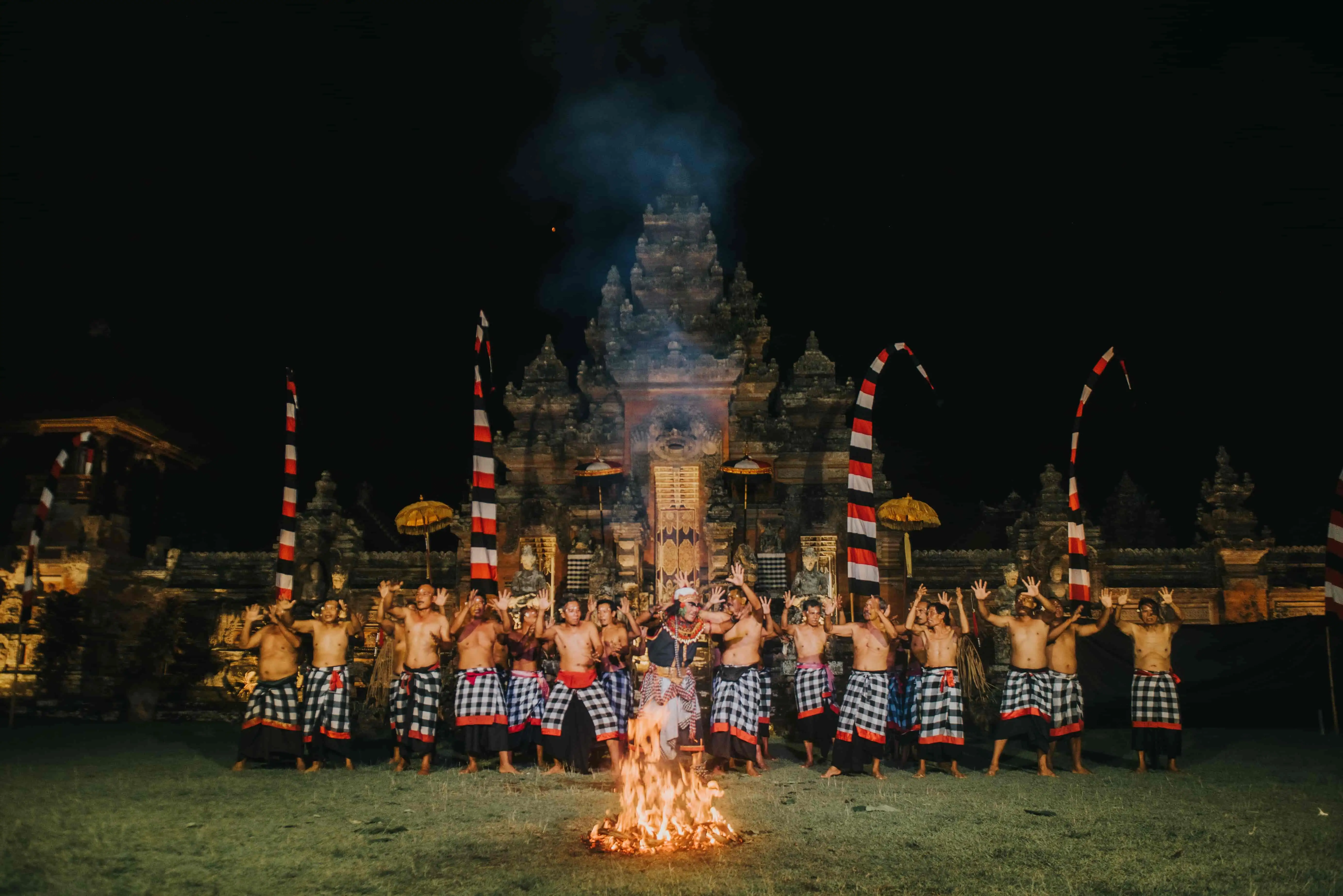
The same visual element can create a different feeling depending on the environment.
Fire in a modern stage show may look impressive.
Fire inside a classic Balinese temple creates another kind of atmosphere.
At Puseh Temple Batubulan, the fire appears alongside traditional architecture, local performers, Kecak voices, and a cultural environment that carries its own identity.
The temple does not simply provide a location.
It creates context.
The darker evening surroundings make the flames more visible. The traditional structures create a stronger visual connection. The audience becomes more focused as the performance reaches its most dramatic moment.
This is why the Fire Dance becomes more than a photograph opportunity.
It becomes part of a complete cultural night.
3. Sang Hyang Jaran: The Sacred Layer of the Experience
The third important element is Sang Hyang Jaran Bali.
For many first-time visitors, Sang Hyang Jaran may be the least familiar part of the performance.
The word “jaran” means horse, and Sang Hyang Jaran is a sacred Balinese dance connected to ritual movement and traditional meaning.
Its role in the evening is different from Kecak and Fire Dance.
Kecak creates rhythm.
Fire Dance creates a visual highlight.
Sang Hyang Jaran adds a sacred cultural layer.
This element reminds visitors that Balinese performance is not only about entertainment. Some traditional expressions carry deeper cultural values and connections to local beliefs and traditions.
The experience should be approached with curiosity and respect.
Visitors do not need to understand every cultural detail immediately. Simply observing the movement, atmosphere, and connection between performers, temple setting, and audience can already provide a deeper appreciation.
How These Three Elements Create One Complete Experience
Kecak, Fire Dance, and Sang Hyang Jaran each have different roles.
But together, they create a complete cultural evening.
Kecak creates the foundation through rhythm and collective voices.
The Ramayana gives the performance a story.
Fire Dance creates the dramatic visual moment.
Sang Hyang Jaran introduces a deeper sacred atmosphere.
The classic temple setting connects everything together.
This combination is what makes the experience at Puseh Temple Batubulan different from a regular stage performance.
Visitors are not only watching separate scenes.
They are experiencing a cultural journey that moves through sound, story, movement, and atmosphere.
What First-Time Visitors Should Expect
If you are watching Kecak for the first time, there is no need to prepare complicated cultural knowledge.
Simply come ready to observe and enjoy the experience.
A few things to expect:
- The performance takes place in the evening
- The atmosphere is created through voices, movement, and traditional storytelling
- The temple setting is an important part of the experience
- Fire creates a dramatic visual moment
- Sang Hyang Jaran should be appreciated as a sacred cultural element
The more attention you give to the details, the more meaningful the experience becomes.
Listen to the rhythm.
Observe the performers.
Notice the temple surroundings.
Understand the story.
These small details help transform the performance from something you watch into something you experience.
Plan Your Bali Cultural Night at Puseh Temple Batubulan
Located in Batubulan Bali, Puseh Temple Batubulan offers an accessible cultural evening for travelers staying around Denpasar, Sanur, Sukawati, Gianyar, and nearby areas.
The daily performance includes:
- Kecak Dance
- Ramayana storytelling
- Fire Dance
- Sang Hyang Jaran
Daily Performance
18.30–20.00 WITA
Ticket Price
IDR 150,000 per person
For first-time visitors looking for a meaningful Bali cultural performance, this experience offers more than a traditional show.
It offers the rhythm of Kecak, the visual energy of Fire Dance, the sacred atmosphere of Sang Hyang Jaran, and the classic ambience of a Balinese temple.
Reserve your seat at Puseh Temple Batubulan and discover a different side of Bali through story, sound, fire, and living culture.
