
Experience the Sacred Side of Bali Through Kecak Fire Dance and Sang Hyang Jaran
Bali is often remembered through its beaches, rice terraces, cafés, waterfalls, and sunset views. These places may shape the photographs travelers bring home, but they are only one part of the island.
Beyond its landscapes, Bali carries a living culture shaped by ceremony, devotion, storytelling, movement, and sacred tradition.
At Puseh Temple Batubulan, visitors are invited to experience this deeper side of the island through Kecak, Fire Dance, and Sang Hyang Jaran. Held within the atmosphere of a classic Balinese temple, the performance becomes more than an evening of entertainment.
It becomes an introduction to the sacred side of Bali.
Through the rhythm of human voices, characters from the Ramayana, dramatic fire, and the sacred presence of Sang Hyang Jaran, the evening connects visitors with a form of Balinese heritage that remains alive through local performers and cultural practice.
Entering a Different Side of Bali
The experience begins with the setting.
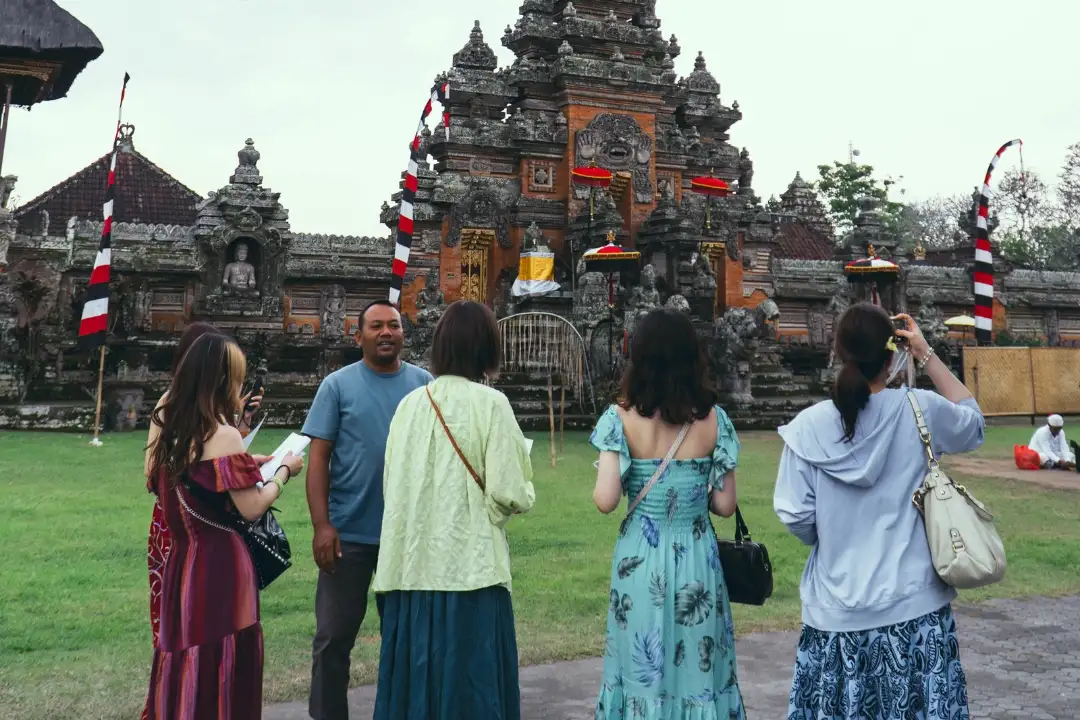
As visitors arrive at Puseh Temple Batubulan, the atmosphere immediately feels different from a modern theatre or commercial performance venue. Traditional stone carvings, temple gates, classical architecture, and warm evening light create a space that already carries a strong cultural identity.
The temple is not simply a place where the performance happens.
Its architecture, history, ambience, and sacred character influence the entire evening. The surroundings change how visitors experience the rhythm, story, movement, and fire that follow.
This temple ambience is one of the most important parts of the night.
Before the first voices begin, the setting creates a transition. Visitors leave behind the movement of the road and enter a space where Bali’s cultural traditions feel closer.
Located in Batubulan, Puseh Temple is relatively easy to reach from the city and nearby travel areas. Yet once inside the temple atmosphere, the experience feels removed from the usual rhythm of a Bali holiday.
It offers a moment to slow down, observe, and connect with something more meaningful.
The Sacred Rhythm of Kecak
The Kecak begins through the collective power of human voices.
A circle of local performers creates a repeated vocal rhythm that becomes the foundation of the entire performance. There is no conventional orchestra directing the night. Instead, the voices rise, fall, accelerate, and shift together.
The sound creates energy from every side.
At first, the rhythm may feel simple. As it continues, it begins to shape the atmosphere around the characters and scenes. It creates tension, builds anticipation, and carries the emotional direction of the story.
Within the temple setting, this rhythm feels especially powerful.
The voices seem connected to the stone architecture, evening air, traditional costumes, and audience gathered around the performance. The Kecak circle does not simply accompany the story. It becomes the heartbeat of the cultural experience.
This is what gives Kecak Fire Dance Bali its distinctive emotional strength.
Visitors may not understand every symbolic movement or narrative detail, but they can still feel the rhythm changing the energy of the night. The experience speaks through sound, expression, repetition, and movement rather than long explanations.
It allows culture to be felt before it is fully understood.
When the Ramayana Story Comes Alive
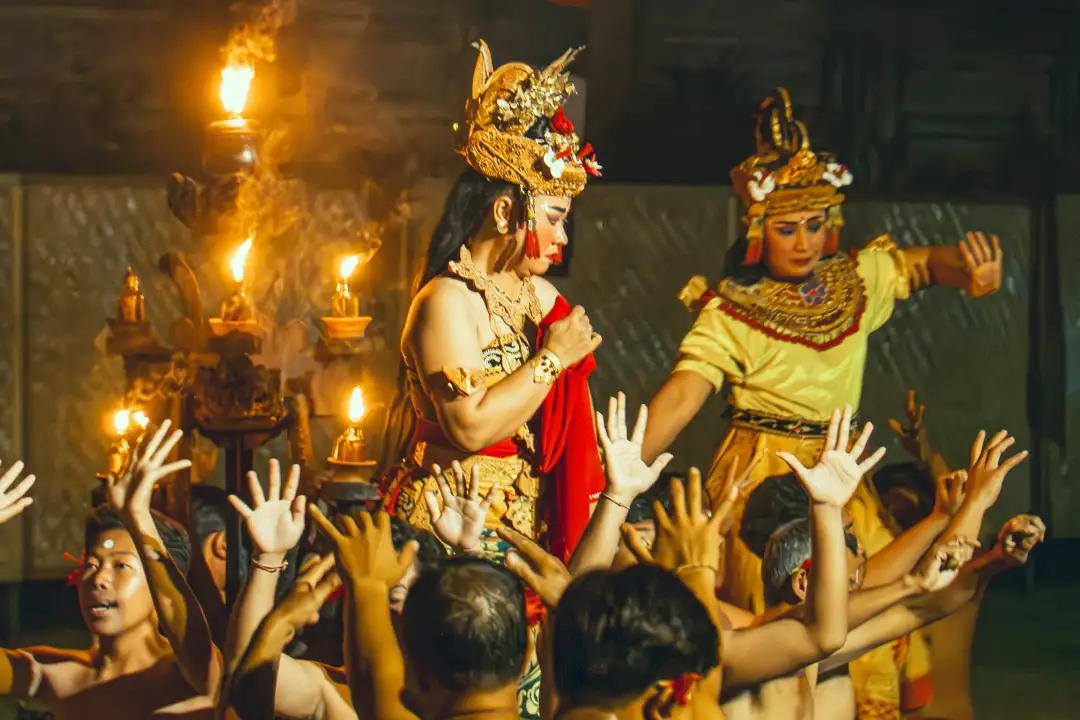
Within the circle of voices, the Ramayana story begins to unfold.
Characters such as Rama, Sita, Hanuman, Jatayu, and Ravana enter the performance through costume, movement, expression, and symbolic scenes. Each character brings a different emotional quality into the evening.
Rama represents courage, devotion, and righteousness. Sita brings grace and inner strength. Hanuman carries loyalty, energy, and determination. Jatayu represents sacrifice, while Ravana introduces conflict and dramatic intensity.
The story is not delivered as an academic lesson.
Instead, it is communicated visually, allowing travelers from different backgrounds to follow its emotional direction. Movement reveals relationships. Expressions communicate tension. Costumes help identify each character, while the Kecak rhythm surrounds every scene.
The classic temple setting gives the story an atmosphere that feels naturally connected to Bali’s cultural traditions.
The characters do not appear on an empty stage. They move within a space shaped by traditional architecture and sacred ambience. This makes the storytelling feel more grounded in place.
For visitors, the Ramayana becomes more than an old story.
It becomes part of a living performance carried forward by local artists, voices, and cultural practice.
When Fire Changes the Night
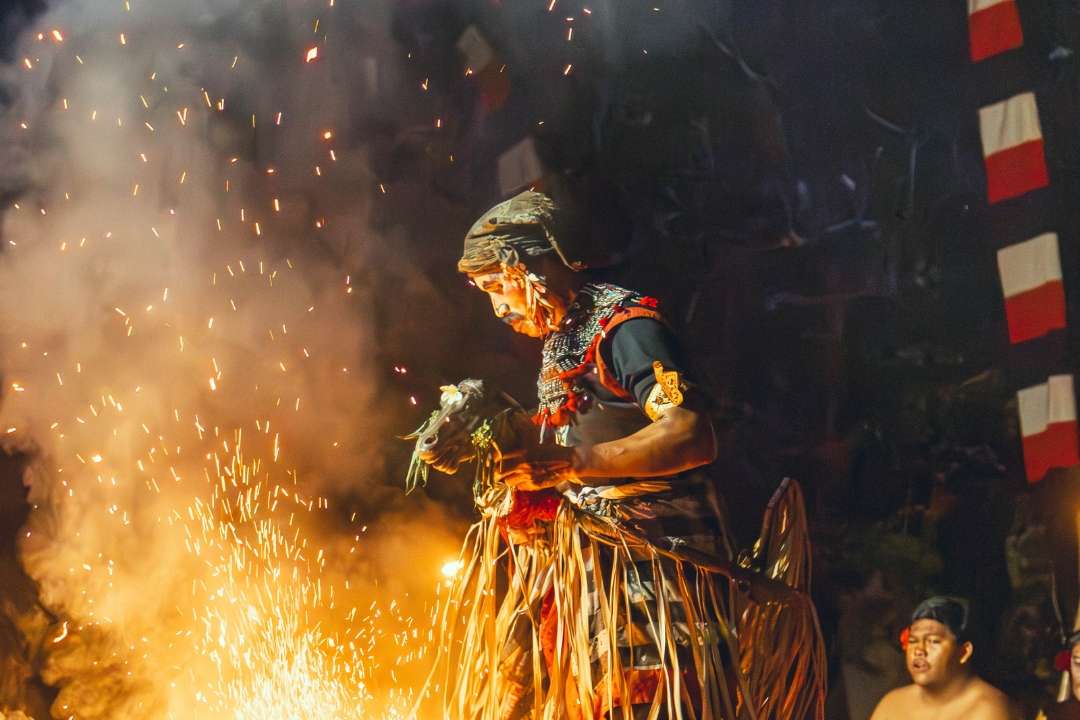
As the performance develops, fire enters the scene.
The atmosphere immediately becomes more intense.
Bright flames stand out against the darker evening, while the voices of Kecak continue around the performance. The movement of the characters, traditional costumes, temple architecture, and fire combine to create one of the most powerful visual moments of the night.
For many visitors, the Fire Dance becomes the scene they remember most clearly.
However, fire is not presented as a separate attraction designed only to create excitement. It grows from the rhythm and story that have already been established.
This connection matters.
The fire feels more meaningful because it exists within a complete cultural evening. It is surrounded by the Ramayana narrative, local performers, temple ambience, and sacred tradition.
The visual intensity may capture attention, but the wider atmosphere gives the moment emotional depth.
This is what makes the Fire Dance at Puseh Temple Batubulan feel different from a performance focused only on spectacle.
Fire becomes part of the story rather than the entire story.
The Sacred Presence of Sang Hyang Jaran
One of the deepest moments of the evening arrives through Sang Hyang Jaran.
Sang Hyang Jaran is a sacred Balinese dance that brings ritual movement, spiritual energy, and cultural meaning into the performance. Its presence introduces visitors to a side of Bali that cannot be separated from tradition and respect.
It should not be viewed simply as another visual highlight.
Sang Hyang Jaran carries a sacred character that changes the emotional atmosphere of the night. Through its movement and connection with fire, the performance brings a deeper spiritual layer into the cultural experience.
The Kecak voices continue around the moment, building rhythm and intensity. The classic temple surroundings strengthen its sacred feeling, while the audience becomes quieter and more focused.
For visitors unfamiliar with the tradition, Sang Hyang Jaran can become an important introduction to Bali’s living heritage.
It reminds us that Balinese performance is not always created only for entertainment. Some forms carry ritual meaning, spiritual values, and cultural connections that have been preserved across generations.
Experiencing this moment within Puseh Temple Batubulan encourages visitors to watch with curiosity and respect.
It is an encounter with culture that remains alive, not something preserved only for display.
Living Heritage Through Local Performance
The phrase “living heritage” means more than protecting temples, costumes, or traditional stories.
Heritage remains alive when people continue to perform it, understand it, teach it, and give it a place within the present.
At Puseh Temple Batubulan, local performers become part of that continuity.
The Kecak rhythm depends on collective discipline and coordination. The Ramayana characters require expressive movement and storytelling. Fire adds intensity, while Sang Hyang Jaran brings sacred meaning into the evening.
Every part of the performance is carried by people.
This human presence is what turns cultural heritage into a living experience.
Visitors are not only looking at symbols of Bali’s past. They are witnessing traditions being performed in the present, within a temple atmosphere that remains connected to the island’s cultural identity.
That connection makes the evening meaningful.
It allows travelers to experience Bali not only through places, but through the people, stories, and traditions that continue to shape them.
A Cultural Evening That Becomes an Emotional Memory
Some travel memories are created by dramatic landscapes. Others come from quieter emotional moments.
The memory of entering a classic temple at night.
The first Kecak rhythm rising from the circle of performers.
The expression of a Ramayana character.
The sudden light of fire against the dark evening.
The sacred atmosphere surrounding Sang Hyang Jaran.
The moment the performance ends and the temple becomes quiet again.
These experiences can remain with visitors because they engage more than sight alone. They involve sound, atmosphere, movement, story, and emotion.
That is what makes a cultural evening at Puseh Temple Batubulan more than another activity added to an itinerary.
It gives travelers a memory connected to Bali’s cultural identity.
Long after the performance ends, visitors may forget the exact order of every scene. However, they are likely to remember how the evening felt: the closeness of the temple, the strength of the voices, the intensity of the fire, and the sacred presence within the performance.
Experience Bali Beyond the Usual Journey
Puseh Temple Batubulan offers an evening for travelers who want to experience Bali beyond its familiar holiday images.
Here, the classic temple ambience becomes part of the performance. The voices of Kecak bring rhythm and energy. The Ramayana carries story and emotion. Fire creates a dramatic highlight, while Sang Hyang Jaran introduces a deeper sacred layer.
Together, these elements reveal a side of Bali shaped by living tradition.
The performance is held daily from:
18.30–20.00 WITA
Ticket price:
IDR 150,000 per person
Located in Batubulan, the temple is easy to include in an evening itinerary after exploring Bali during the day.
Experience Kecak, Fire Dance, and Sang Hyang Jaran within the classic atmosphere of Puseh Temple Batubulan.
Reserve your seat and discover the sacred side of Bali through story, rhythm, fire, and living heritage.


