
Bali Is More Than Beautiful Places It Is Living Culture
Bali is often introduced through a collection of beautiful places.
Beaches appear in travel videos. Rice terraces fill social media feeds. Waterfalls, temples, cafés, and sunset viewpoints become locations to save, visit, photograph, and move on from.
These places are part of what makes Bali special, but they do not tell the whole story.
Bali is not only a destination shaped by landscapes. It is an island where culture continues to live through daily offerings, temple ceremonies, traditional art, sacred spaces, storytelling, music, movement, and community performance.
To understand Bali more deeply, travelers need to look beyond what the island looks like and begin discovering how it lives.
A meaningful cultural experience Bali is not only about observing something traditional. It is about entering an atmosphere where heritage remains active, local performers continue inherited practices, and stories from the past still carry meaning in the present.
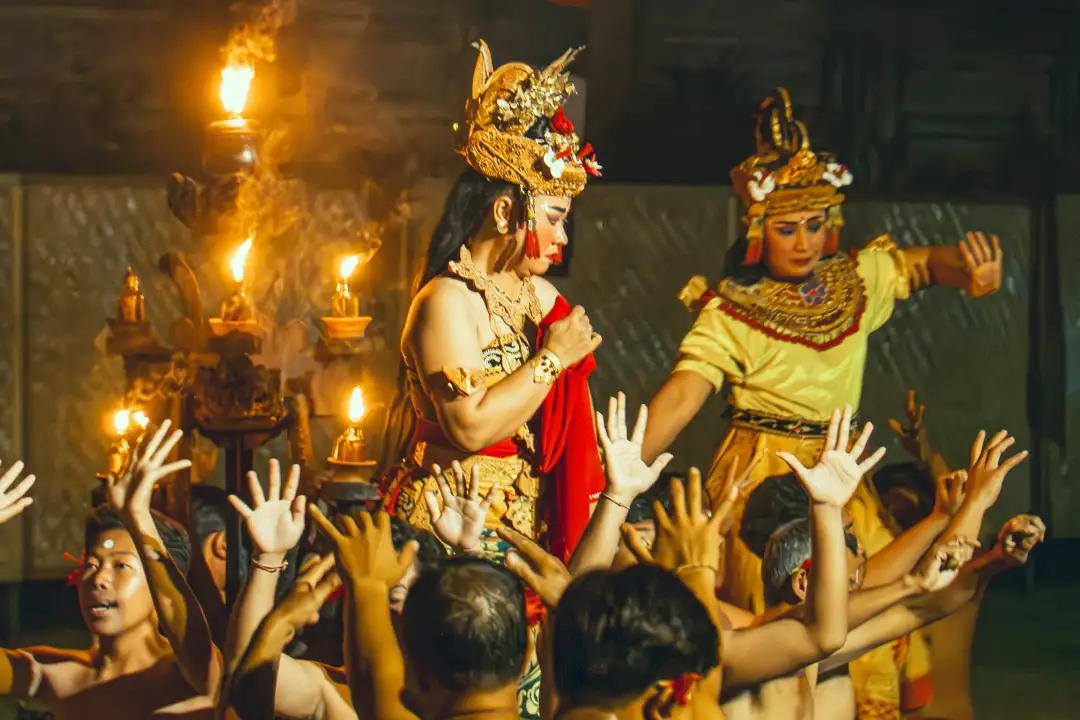
At Puseh Temple Batubulan, visitors can experience this side of the island through Kecak, Fire Dance, Sang Hyang Jaran, Ramayana storytelling, and the atmosphere of a classic Balinese temple.
It is one access point into Bali living culture after sunset.
Bali Is More Than a Collection of Destinations
It is easy to experience Bali as a checklist.
Visit a waterfall. Take a photograph at a rice terrace. Stop at a temple. Watch the sunset. Find a restaurant. Continue to the next destination.
This way of traveling can show you many places, but it does not always create a deeper connection with the island.
Bali’s identity is not contained within one landmark.
It exists in the relationship between people, traditions, sacred spaces, artistic expression, and everyday devotion. A temple is not only impressive architecture. A dance is not simply a performance. An offering is not merely a decoration.
Each element belongs to a wider cultural life.
When travelers begin to recognize this, Bali feels different. The island becomes more than scenery. Its temples, performances, and community practices begin to reveal the values and stories that continue to shape local life.
This is the difference between visiting Bali and beginning to understand it.
Culture Is Present in Everyday Life

In Bali, culture is not reserved only for museums or major festivals.
It can be found in small moments throughout the day.
Offerings are prepared and placed with care. Traditional clothing is worn for temple occasions. Ceremonial processions move through villages. Music and dance are taught across generations. Temples remain active spaces for prayer, community, and cultural continuity.
Art, spirituality, and daily life often exist close together.
This is why Bali heritage should not be understood only as something from the past. Heritage remains alive because people continue to practise, perform, protect, and share it.
Traditional performance plays an important role in that continuity.
Through movement, costume, voices, symbolic characters, and familiar stories, cultural knowledge can be carried from one generation to another. It can also be introduced to visitors in a way that is emotional, visual, and easier to understand.
For travelers, attending a cultural performance can become an opportunity to experience Bali through the people who continue to bring these traditions to life.
Ceremony Art and Performance Are Connected
Bali’s cultural identity is shaped by many expressions that are closely connected.
Ceremony creates spaces for devotion and community. Art gives visual form to belief, history, and local identity. Performance carries stories through voice, movement, character, and rhythm.
These expressions should not always be viewed as completely separate.
Temple architecture provides more than visual beauty. It gives cultural and spiritual context to what happens within the space. Traditional costumes communicate character and symbolism. Movement can express emotion, conflict, loyalty, and sacred meaning.
Performance becomes stronger when it is connected to its cultural setting.
This is one reason a temple performance can feel different from a show held in a conventional entertainment venue.
The surroundings are not neutral.
Temple gates, carved stone, traditional architecture, evening light, local performers, and the atmosphere of the space all influence the audience’s experience. The venue does not simply hold the performance. It helps give the performance a stronger sense of place.
Puseh Temple Batubulan as an Access Point to Living Culture

For international visitors, Balinese culture can sometimes feel complex.
There are many traditions, ceremonies, stories, symbols, and forms of performance. Travelers may be interested but unsure where to begin.
Puseh Temple Batubulan offers an accessible starting point.
Located in Batubulan, relatively close to the city and several popular travel areas, the temple presents Kecak, Fire Dance, and Sang Hyang Jaran within a classic Balinese temple atmosphere.
The experience introduces visitors to several layers of local culture in one evening.
The temple creates the setting. The Kecak rhythm establishes the energy. The Ramayana provides the story. Fire becomes the visual highlight, while Sang Hyang Jaran brings a deeper sacred dimension into the night.
Each element offers a different way to connect with Bali.
Visitors do not need to arrive with advanced knowledge of Balinese culture. The performance communicates through atmosphere, sound, movement, character, and emotion.
It allows culture to be experienced before every detail is fully understood.
The Kecak Rhythm Is Created by People
One of the most recognizable elements of Kecak dance Bali is its powerful vocal rhythm.
A circle of local performers creates coordinated patterns using human voices. Instead of relying on a conventional musical orchestra, the performers themselves become the rhythmic foundation of the evening.
The voices shift in pace and intensity.
They create anticipation, support dramatic scenes, and surround the characters with a distinctive sound that has become closely associated with Kecak.
Inside the classic ambience of Puseh Temple Batubulan, this rhythm feels connected to the space around it.
The stone architecture, evening atmosphere, audience, and circle of performers come together in one cultural environment. The sound is not experienced as background music played from a distance. It is created live by people working collectively.
This human connection is essential to the feeling of living heritage.
The tradition continues because performers continue to carry it.
The Ramayana Connects Rhythm With Story
The voices of Kecak create energy, but the Ramayana gives the performance emotional direction.
Characters such as Rama, Sita, Hanuman, Jatayu, and Ravana bring courage, devotion, loyalty, sacrifice, and conflict into the evening.
The story is shared through movement, expression, costume, and interaction.
Visitors do not need to understand every part of the Ramayana to connect with what is happening. The emotional roles of the characters can be followed visually, making the performance accessible to travelers from different countries and cultural backgrounds.
The temple setting strengthens this storytelling.
Characters do not appear on a modern stage separated from the cultural world they represent. They move within an atmosphere shaped by traditional Balinese architecture and local heritage.
The result feels less like a story placed on display and more like a tradition being brought into the present.
Fire Creates a Visual Turning Point
As the story develops, Fire Dance changes the energy of the evening.
The flames create a powerful contrast against the dark temple atmosphere. Movement becomes more intense, the Kecak rhythm continues around the scene, and the audience’s attention becomes focused on one dramatic moment.
Fire is a strong visual element, but it should not be separated from the cultural experience around it.
At Puseh Temple Batubulan, it forms part of a wider night shaped by temple ambience, Ramayana storytelling, local performers, and sacred tradition.
This context makes the visual moment more meaningful.
The fire may be what visitors first remember, but the atmosphere surrounding it is what gives the scene its depth.
Sang Hyang Jaran Reveals a Sacred Layer
The presence of Sang Hyang Jaran introduces visitors to a deeper side of Balinese performance.
Sang Hyang Jaran is a sacred Balinese dance connected to ritual movement, spiritual energy, and traditional cultural meaning. It is not simply an additional attraction or dramatic visual moment.
Its presence changes the emotional atmosphere of the evening.
Surrounded by the Kecak rhythm, fire, and temple setting, Sang Hyang Jaran brings a sacred layer that distinguishes the experience from a performance created only for entertainment.
For visitors, this can be an important reminder.
Not every cultural expression exists only to be photographed or consumed quickly. Some traditions carry meanings that require attention, curiosity, and respect.
Experiencing Sang Hyang Jaran within Puseh Temple Batubulan allows travelers to encounter a part of Bali’s culture that remains connected to living spiritual and community traditions.
From Photographing Bali to Remembering How It Felt
Beautiful places often create strong photographs.
Living culture creates a different kind of memory.
You may remember the moment the first Kecak voices filled the temple. You may remember how the Ramayana characters moved through the evening atmosphere. You may remember the contrast of fire against traditional stone architecture or the quieter attention surrounding Sang Hyang Jaran.
These memories are built through more than sight.
They involve rhythm, emotion, atmosphere, movement, and a sense of being present within a cultural space.
This is why cultural experiences can stay with travelers long after individual destinations begin to blend together.
A photograph records what a place looked like.
An emotional memory carries how the experience felt.
Experience Bali as a Living Culture
Bali will always be known for its remarkable landscapes, but the island cannot be fully understood through beautiful places alone.
Its deeper identity lives through ceremonies, art, sacred spaces, traditional stories, local performers, and cultural practices that continue across generations.
Puseh Temple Batubulan offers visitors an opportunity to enter this living culture through one meaningful evening.
Experience the voices of Kecak, the characters of the Ramayana, the intensity of Fire Dance, and the sacred presence of Sang Hyang Jaran within a classic Balinese temple atmosphere.
Daily Performance
18.30–20.00 WITA
Ticket Price
IDR 150,000 per person
Do not only visit Bali’s destinations.
Take time to experience the traditions, people, stories, and sacred atmosphere that give the island its identity.
Reserve your seat at Puseh Temple Batubulan and discover Bali not only as a beautiful place, but as a living culture.


