
8 Photos You Will Want to Take at Puseh Temple Batubulan

A Bali trip is often filled with moments you want to capture.
A beautiful beach before sunset. Traditional architecture. Local food. Hidden corners of the island. These photographs become a way to remember the atmosphere of the places you experienced.
But some moments are not only about taking a photo.
They are about capturing a feeling.
At Puseh Temple Batubulan, visitors can experience a cultural evening where temple architecture, Kecak rhythm, local performers, Fire Dance, and Sang Hyang Jaran come together in one atmosphere.
For travelers and content creators looking for unique Puseh Temple Batubulan photos, the experience offers many visual opportunities.
From the classic temple details before the show begins to the dramatic fire scenes during the performance, every part of the evening creates a different story.
Here are eight photo moments you will want to capture during your visit.
1. The First Look at the Classic Temple Entrance
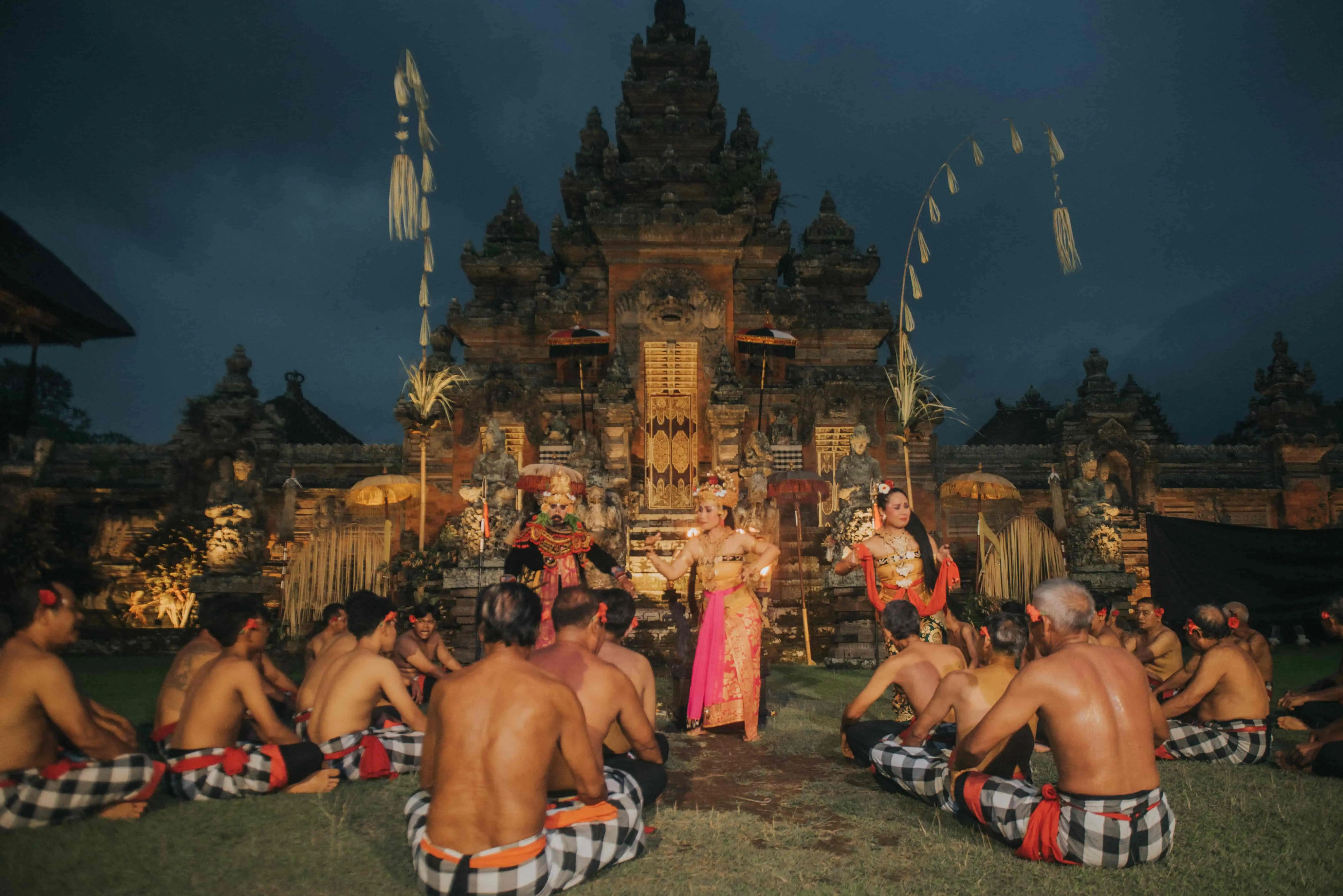
The experience begins before the performance starts.
One of the first photos worth taking is the entrance area of Puseh Temple Batubulan.
Traditional gates, stone details, and classic Balinese architecture create an immediate connection to the cultural atmosphere of the evening.
This is the moment that introduces the setting.
Unlike a regular entertainment venue, the temple itself already tells a story. The structures, patterns, and traditional elements create a visual identity that feels connected to Bali’s heritage.
For content creators, this type of photo works well as an opening image because it sets the mood before showing the performance.
Instead of immediately focusing on the stage, capture the place where the story begins.
The entrance represents the transition from an ordinary evening into a cultural experience.
2. Temple Architecture Under the Evening Light
The temple becomes even more visually interesting as the evening atmosphere develops.
Warm lighting, traditional structures, and the contrast between stone details and the night sky create a unique visual character.
This is one of the best opportunities for temple ambience Bali photography.
Focus on details rather than only wide shots.
Look for:
- Traditional stone carvings
- Temple gates
- Architectural patterns
- Light and shadow combinations
- The relationship between visitors and the surrounding space
These details help communicate the atmosphere of the location.
A good cultural photograph does not always need a performer in the frame. Sometimes the strongest image comes from showing the environment that makes the experience possible.
The temple architecture creates the foundation of the evening.
3. The Kecak Circle of Performers
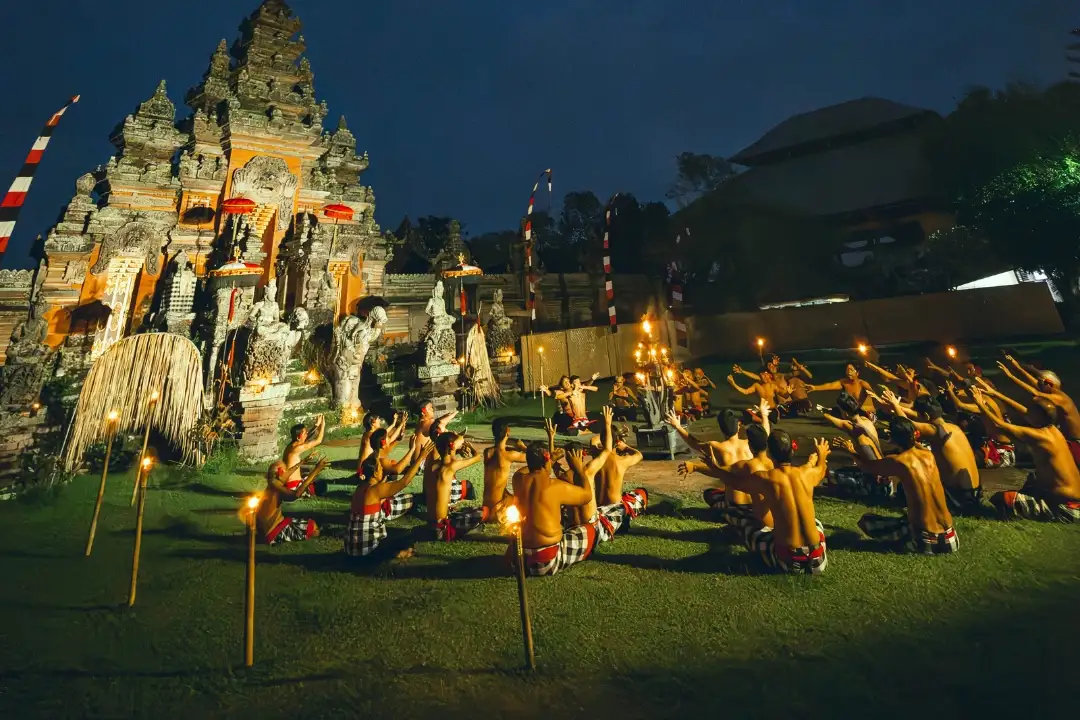
One of the most recognizable moments of the night is the Kecak performance.
A circle of local performers creates the rhythm through coordinated human voices. Their arrangement, movement, and expressions create a powerful visual composition.
This is one of the most important moments to capture for anyone interested in Kecak dance Bali photography.
The circular formation naturally creates strong visual balance.
You can capture:
- The full circle of performers
- The expressions during the rhythm
- The movement of hands and bodies
- The connection between performers and audience
The strength of this photo comes from the human element.
It shows that Kecak is not only about sound. It is about collective energy created by many people working together.
For a stronger image, focus on the relationship between the performers and the temple surroundings.
The combination of traditional setting and human movement creates a photograph that feels connected to Bali.
4. The Ramayana Characters in Traditional Costumes
The Kecak performance brings parts of the Ramayana story to life through characters, movement, and expression.
Characters such as Rama, Sita, Hanuman, Jatayu, and Ravana create some of the most expressive photo opportunities during the evening.
The costumes, makeup, and gestures help communicate each character’s role.
A close-up photograph can capture:
- Facial expressions
- Traditional costume details
- Character movement
- Interaction between performers
These images tell more of the story behind the performance.
Instead of only photographing a dance, you capture a cultural narrative.
For visitors who may not know the full Ramayana story, these visual details become a way to understand the emotional direction of the performance.
The characters create personality within the cultural experience.
5. The Fire Dance Moment

The fire scene is often the photograph everyone waits for.
When flames appear during the performance, the atmosphere changes immediately.
The contrast between fire, traditional costumes, temple surroundings, and the darker evening creates one of the strongest visual moments of the night.
For travelers searching for a memorable Fire Dance photo, this is the highlight.
The best images often capture the relationship between elements:
The movement of the flame.
The expression of the performer.
The surrounding temple atmosphere.
The reaction of the audience.
However, remember that the Fire Dance is not only a visual attraction.
It is part of a wider cultural performance connected to Kecak, Ramayana storytelling, and traditional Balinese expression.
The goal is not only to capture a dramatic image, but to respect the cultural moment happening in front of you.
6. Sang Hyang Jaran and the Sacred Atmosphere
Another meaningful photo opportunity comes during Sang Hyang Jaran.
For many visitors, this may be a less familiar part of the evening, but it adds a deeper cultural layer to the experience.
Sang Hyang Jaran is a sacred Balinese dance connected to ritual movement and traditional meaning.
The visual strength of this moment comes from atmosphere.
The movement, focus of the performers, surrounding rhythm, fire, and temple setting create a different feeling from other parts of the show.
When photographing this moment, focus on the mood rather than only the action.
Capture:
- The movement of the performer
- The surrounding temple environment
- The connection between light and shadow
- The respectful attention of the audience
This creates a photograph that communicates the cultural depth of the experience.
It shows that the evening is not only about entertainment, but also about tradition.
7. The Audience Experiencing the Performance
Sometimes the best cultural photographs are not only about what happens on stage.
They are about the people experiencing it.
Capturing audience reactions can tell a different story.
A photo of visitors watching the Kecak rhythm, focusing during the Fire Dance, or observing a sacred moment can show the emotional side of the evening.
These images communicate scale and atmosphere.
They show that the performance creates a shared experience between local performers and international visitors.
For travel content creators, these types of photos often feel more natural because they capture a real moment rather than a posed scene.
The audience becomes part of the story.
A cultural experience is not complete without the people who come to witness it.
8. The Final Moment After the Performance
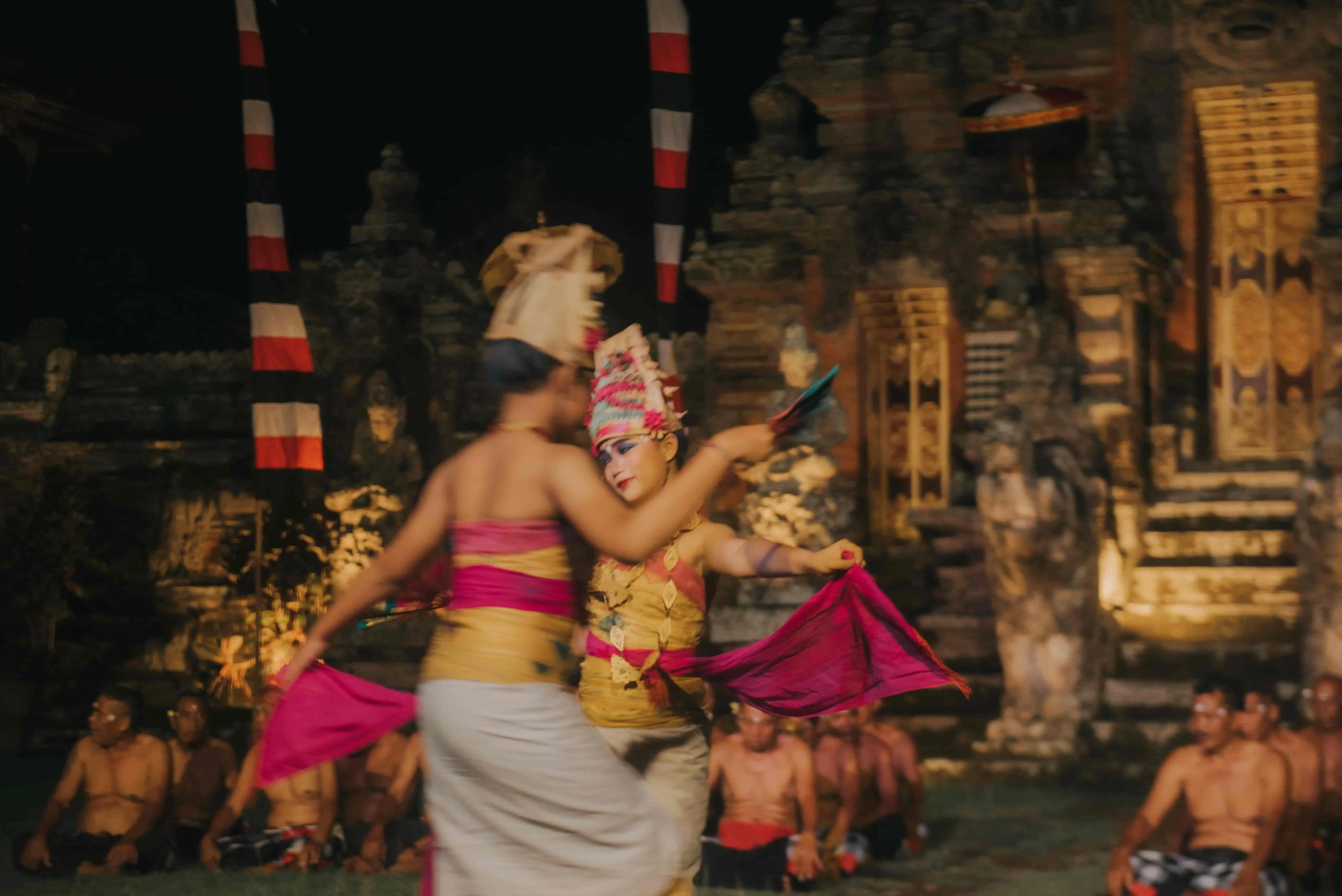
The end of the evening creates another unique photo opportunity.
After the final scenes, the atmosphere changes.
The energy of the performance slowly settles. Visitors leave with memories of the rhythm, story, fire, and temple environment.
This quieter moment can create some of the most emotional images.
You can capture:
- The temple atmosphere after the show
- Visitors leaving the performance area
- The final lighting around the temple
- The overall evening mood
These photos represent the feeling after experiencing something meaningful.
They are not about the biggest visual moment.
They are about the memory that remains.
Photograph With Respect for the Cultural Experience
Capturing beautiful photos at Puseh Temple Batubulan is part of the experience, but respecting the performance is equally important.
Remember a few simple guidelines:
- Avoid blocking other visitors’ views
- Do not interrupt performers
- Follow staff instructions
- Respect restricted temple areas
- Be mindful during sacred moments
- Enjoy some moments without looking through your camera
The best travel content does not only show what a place looks like.
It shows appreciation for what the place represents.
At Puseh Temple Batubulan, every photo becomes more meaningful when it respects the culture behind it.
Create More Than Photos Create Memories
A great travel photograph does more than capture an image.
It captures an atmosphere.
At Puseh Temple Batubulan, visitors can capture the classic temple setting, the Kecak circle, Ramayana characters, Fire Dance, Sang Hyang Jaran, and the emotions of the audience experiencing the evening.
These moments create more than visual content.
They create memories connected to Bali’s living culture.
Located in Batubulan Bali, Puseh Temple Batubulan offers a unique cultural evening experience for travelers looking beyond ordinary nightlife.
Daily Performance
18.30–20.00 WITA
Ticket Price
IDR 150,000 per person
Experience Kecak, Fire Dance, Sang Hyang Jaran, and the atmosphere of a classic Balinese temple.
Bring your camera, but also take time to experience the moment.
Reserve your seat at Puseh Temple Batubulan and capture a Bali cultural experience worth remembering.

