
7 Moments That Make Kecak Night at Puseh Temple Batubulan Worth Booking
Some Bali nights are built around dinner reservations, sunset drinks, or crowded entertainment areas. Others leave you with something more meaningful: a story, an atmosphere, and a closer connection to the island’s living culture.
A Kecak night at Puseh Temple Batubulan belongs to the second kind.
This is not simply a performance where visitors arrive, take their seats, and wait for the main attraction. The experience develops through a series of moments, beginning with the atmosphere of the temple and continuing through rhythm, storytelling, fire, sacred movement, and the final silence after the performance ends.
For travelers searching for a memorable Bali night activity, these are seven moments that make the evening worth booking.
1. The Moment You Enter the Classic Temple Atmosphere

The experience begins before the performers appear.
As you arrive at Puseh Temple Batubulan, the temple architecture immediately changes the mood of the evening. Traditional stone carvings, classic gates, temple walls, and warm night lighting create an environment that feels distinctly Balinese.
This first impression matters because the temple is not only the location of the performance. It shapes how the entire night feels.
You are not entering a modern theatre or a temporary event space. You are stepping into a cultural setting where the architecture carries its own character. The surrounding temple atmosphere prepares you for an evening rooted in story, tradition, and performance.
This is one reason the experience feels different from a standard Bali cultural show.
The visual setting helps separate the evening from the faster pace of Bali’s tourist areas. Even though the temple is located in Batubulan Bali, relatively close to the city and major travel routes, the atmosphere feels more connected to the island’s cultural heritage.
That transition from the road outside to the temple atmosphere inside is the first memorable moment of the night.
2. The Moment the Kecak Rhythm Takes Over the Space
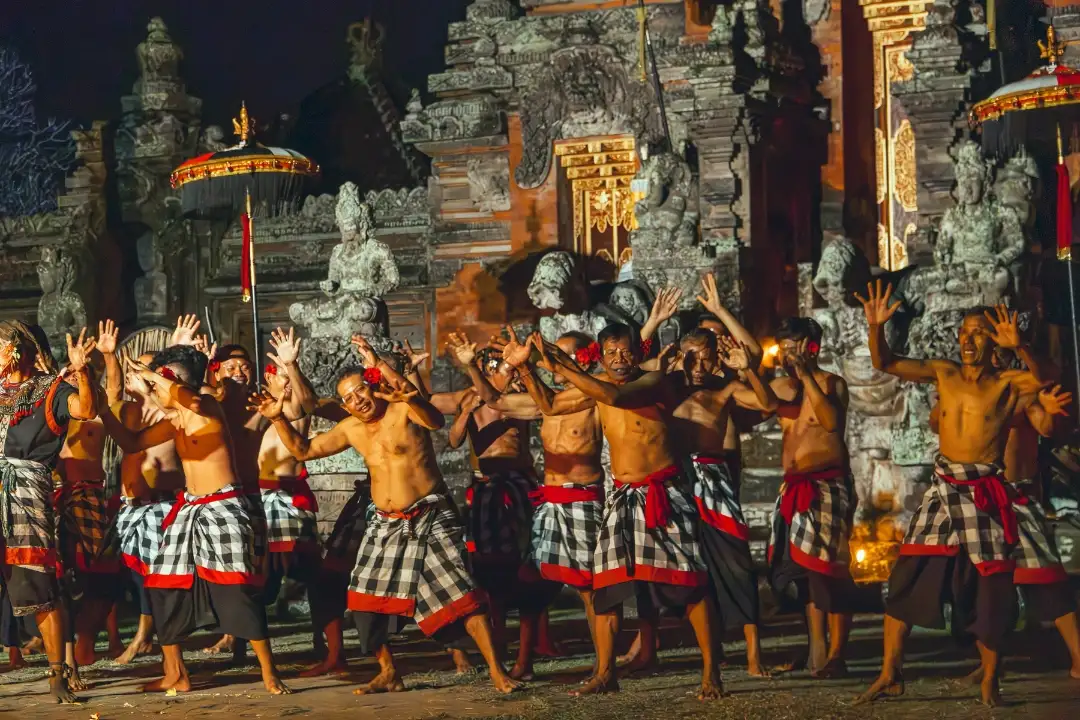
Then the voices begin.
A circle of local performers creates the distinctive Kecak rhythm using the human voice. There is no need for a conventional orchestra to build the energy. The rhythm grows through repetition, coordination, and the collective power of the performers.
At first, the sound establishes the atmosphere. Then it becomes stronger, surrounding the story and directing the emotional pace of the performance.
This is one of the most recognizable elements of Kecak dance Bali, but the temple setting gives it a different feeling.
The voices do not sound disconnected from the environment. They feel as though they belong within the temple space. The architecture, night atmosphere, performers, and audience become part of one shared moment.
The rhythm moves through different levels of intensity. It can create tension, anticipation, and energy without relying on elaborate stage technology.
For many visitors, this is the point when they stop observing the details around them and become fully focused on the performance.
The Kecak rhythm is not just background sound. It becomes the heartbeat of the evening.
3. The Moment the Ramayana Characters Bring the Story to Life

The rhythm creates the foundation, but the characters give the evening its story.
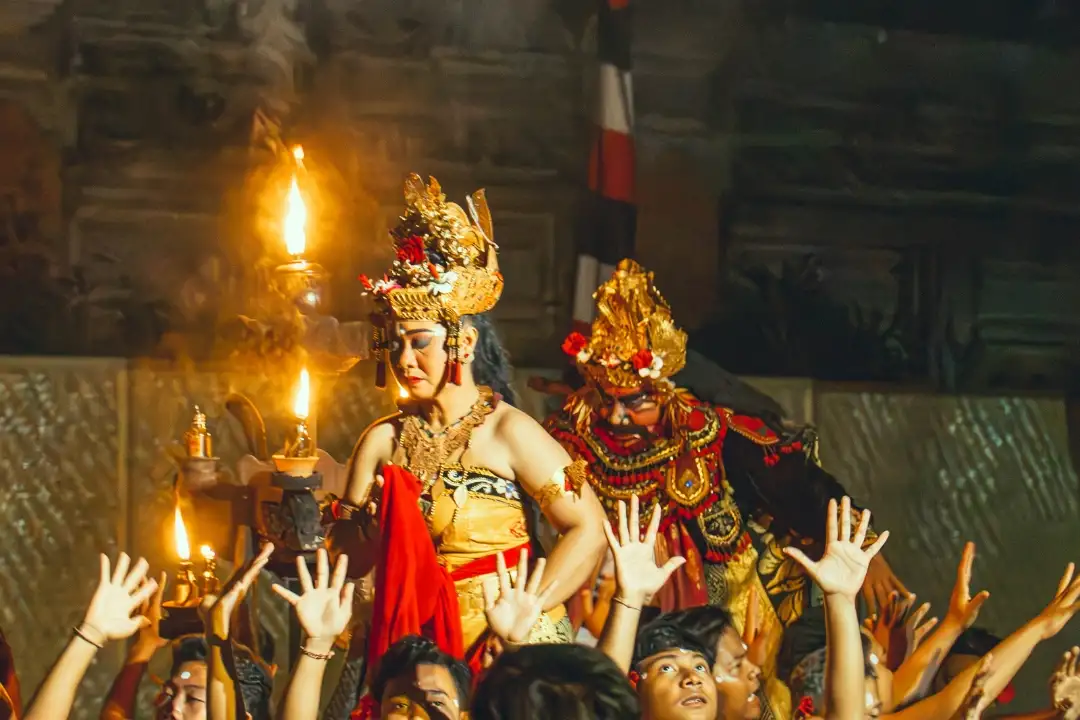
Through movement, costume, expression, and symbolic scenes, the performance introduces part of the Ramayana. Visitors encounter characters such as Rama, Sita, Hanuman, Jatayu, and Ravana, each bringing a different emotional role into the night.
Rama carries courage and devotion. Sita brings grace and inner strength. Hanuman adds loyalty, movement, and powerful energy. Jatayu represents sacrifice, while Ravana introduces conflict and dramatic intensity.
You do not need to know every part of the Ramayana before attending.
The characters communicate through their movements and interactions, allowing international visitors to follow the emotional direction of the story. The temple ambience also strengthens the storytelling by giving the scenes a setting that feels naturally connected to Balinese performance traditions.
This moment gives greater meaning to the rhythm around it.
The Kecak circle is no longer creating sound alone. The voices begin to frame conflict, emotion, movement, and transformation within the story.
Instead of watching separate cultural elements, visitors experience rhythm and narrative working together.
4. The Moment Fire Changes the Energy of the Night

There is a noticeable point when the atmosphere becomes more intense.
Fire enters the performance, and the visual energy immediately rises.
The contrast is powerful: bright flames against the dark evening, traditional costumes moving through the temple setting, and the Kecak rhythm continuing around the scene.
For visitors searching for Fire Dance Bali, this is likely to be one of the most anticipated moments. However, the fire at Puseh Temple Batubulan is not presented as a separate spectacle designed only to surprise the audience.
It remains connected to the wider cultural experience.
The rhythm has already built the atmosphere. The Ramayana characters have already introduced story and emotion. When fire appears, it becomes the dramatic highlight of a night that has been developing from the beginning.
This makes the moment feel more powerful.
It is not only the flames that capture attention. It is the combination of fire, voices, movement, traditional architecture, and evening ambience.
The temple setting makes the visual contrast stronger, turning the Fire Dance into one of the most memorable scenes of the performance without allowing it to overshadow the cultural meaning of the night.
5. The Moment Sang Hyang Jaran Brings a Sacred Layer
The night becomes deeper with the presence of Sang Hyang Jaran.
Sang Hyang Jaran is a sacred Balinese dance connected to ritual movement, spiritual energy, and traditional cultural meaning. Its presence distinguishes this evening from a performance that focuses only on Kecak and fire.
This moment should not be viewed simply as another attraction.
Sang Hyang Jaran adds a sacred layer to the night, changing the atmosphere through movement, ritual character, and its connection to Balinese tradition. Surrounded by the voices of the Kecak performers and the temple setting, the moment carries a different emotional weight.
It can feel intense, but it is also meaningful.
For international visitors who may not be familiar with Sang Hyang Jaran, the performance becomes an introduction to a deeper side of Bali’s living heritage. It shows that Balinese performance can carry spiritual and cultural significance beyond its visual presentation.
This is one of the strongest reasons Puseh Temple Batubulan feels different.
The experience does not stop at recognizable elements such as Kecak and Fire Dance. It introduces visitors to a sacred tradition that gives the evening greater cultural depth.
6. The Moment the Entire Audience Becomes Still
A strong cultural performance is not only defined by what happens in front of the audience. It can also be felt through the attention of the people watching.
At certain points during the evening, the rhythm, characters, movement, and fire draw the audience into the same moment.
Conversations become quieter. Phones are lowered. Attention shifts toward the performance.
Couples, families, solo travelers, tour groups, and cultural visitors may arrive with different expectations, but the atmosphere gives them something to experience together.
This shared attention adds another layer to the night.
The Kecak circle creates sound from multiple voices, while the audience forms another circle around the experience. Everyone is present within the same temple atmosphere, watching the Ramayana story and sacred performance unfold.
This is different from entertainment that can be watched casually while doing something else.
The performance asks for attention.
The visual moments may bring excitement, but the quieter moments are equally important. They allow visitors to absorb the rhythm, costumes, expressions, temple details, and cultural atmosphere without needing constant explanation.
For those looking for a Bali night activity that feels more meaningful than a typical evening out, this sense of shared focus is part of what makes the booking worthwhile.
7. The Moment the Performance Ends but the Atmosphere Stays With You
Then the rhythm stops.
The performers complete the final part of the evening, the energy begins to settle, and visitors prepare to leave the temple.
However, the experience does not end as suddenly as the performance.
The temple surroundings remain. The visual memory of fire, the sound of the Kecak rhythm, the Ramayana characters, and the sacred presence of Sang Hyang Jaran continue to shape how the night is remembered.
This final moment gives visitors time to understand what made the experience different.
It was not one scene alone.
It was the entrance through the classic temple atmosphere. It was the circle of voices building rhythm. It was the story becoming clearer through characters and movement. It was fire changing the energy, Sang Hyang Jaran adding sacred depth, and the audience becoming part of a shared cultural night.
Together, these moments create an experience that feels more complete than simply watching a show.
They allow visitors to leave with a stronger impression of Bali as a place of living culture, not only beautiful destinations.
A Bali Night Worth Adding to Your Itinerary
Puseh Temple Batubulan offers a cultural evening for travelers who want to experience Bali beyond daytime tours, beaches, restaurants, and sunset spots.
Its location in Batubulan makes it convenient to include after a day trip, especially for visitors staying around Denpasar, Sanur, Sukawati, Gianyar, or traveling along the route toward Ubud.
The daily performance runs from:
18.30–20.00 WITA
Ticket price:
IDR 150,000 per person
For travelers searching for a ticket Kecak experience that combines classic temple ambience, Kecak rhythm, Ramayana storytelling, Fire Dance, and Sang Hyang Jaran, this evening brings each element together in one setting.
The reason to book is not only the performance itself.
It is the sequence of moments that surrounds it from entering the temple to hearing the final rhythm fade into the night.
Reserve your seat at Puseh Temple Batubulan and add a more meaningful cultural experience to your Bali evening plan.


