
6 Characters You Will Notice in a Kecak Dance Performance

For first-time visitors, watching a Kecak performance Bali can feel visually impressive from the very first moment.
The powerful rhythm of voices.
The circle of performers.
The traditional costumes.
The dramatic movement.
The fire that transforms the atmosphere.
But behind all these elements, there is a story that gives the performance its meaning.
The story comes from the Ramayana, one of the most important epic stories represented in Balinese performing arts.
At Puseh Temple Batubulan, visitors experience this story through movement, expression, costumes, and character interactions. Understanding the main figures before watching the show can make the experience more enjoyable because every character carries a different emotion and role.
From Rama’s courage to Hanuman’s loyalty, each figure helps bring the Ramayana Bali story to life.
Here are six characters you will notice during a Kecak dance performance and what they represent.
1. Rama The Symbol of Courage and Responsibility

Rama is the central character of the Ramayana story.
He is known as a figure who represents courage, responsibility, and devotion. Throughout the story, Rama faces challenges while remaining committed to his values and responsibilities.
In a Kecak performance, Rama is often portrayed through confident movement, calm expressions, and interactions that show his role as the hero of the story.
His journey becomes the main path that connects different events within the performance.
For visitors watching the show, Rama helps create the foundation of the story.
He represents the struggle to protect what is important and the strength needed to continue through difficult situations.
Within the atmosphere of Puseh Temple Batubulan, Rama’s character feels more connected because the traditional temple setting creates a cultural environment where the story can unfold naturally.
The audience does not only see a character moving across the stage.
They see a story about courage being expressed through traditional performance.
2. Sita The Emotional Heart of the Story
Sita plays an important role in the emotional journey of the Ramayana.
She represents grace, strength, and devotion.
Although Sita’s story is connected to the central conflict of the Ramayana, her character represents much more than being part of the challenge faced by Rama.
She represents emotional strength during difficult moments.
During the Kecak performance, Sita’s character is communicated through expression, movement, and interaction with other characters.
Her presence adds a deeper emotional layer to the story.
While other characters may bring action and conflict, Sita represents the human side of the journey.
Her relationship with Rama helps audiences understand the importance of loyalty, connection, and commitment within the story.
For first-time visitors, following Sita’s character can help make the performance easier to understand because her role connects many emotional moments together.
3. Hanuman The Character Full of Energy and Loyalty
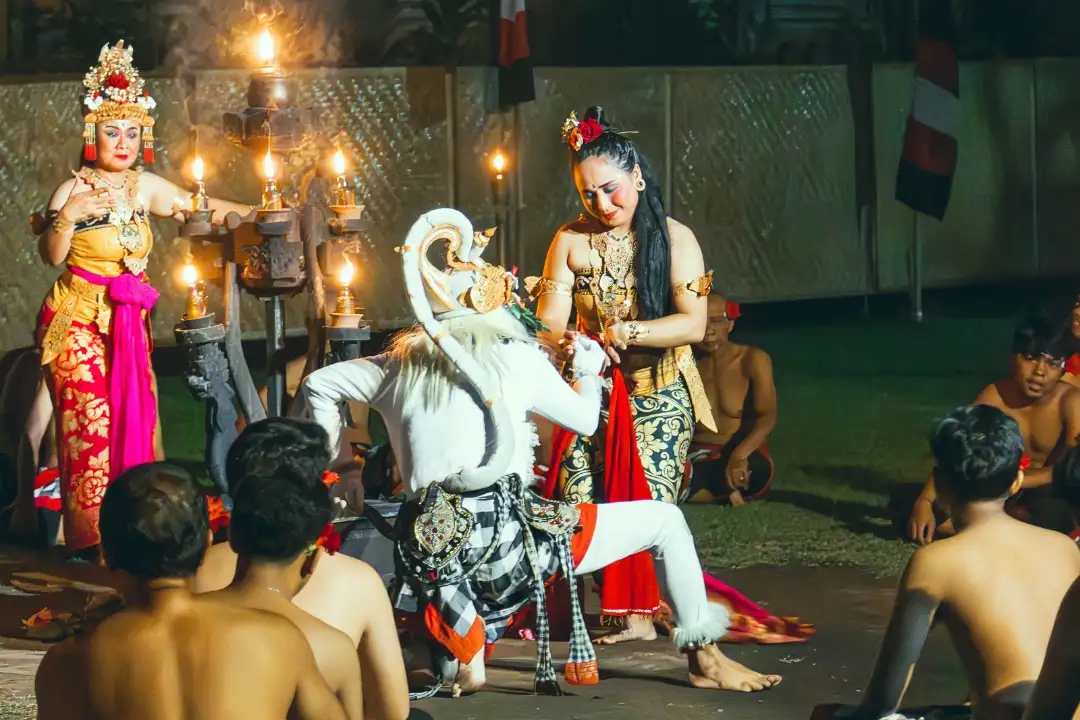
Hanuman is often one of the most memorable characters for visitors.
Known for his loyalty, courage, and powerful energy, Hanuman brings a different atmosphere into the performance.
His movements are usually more dynamic and expressive, making him one of the characters that naturally attracts audience attention.
But Hanuman’s importance is not only based on his appearance or movement.
He represents loyalty and dedication.
His role in the Ramayana shows the importance of helping others and staying committed to a purpose.
In a Kecak dance characters experience, Hanuman often creates some of the most exciting moments because of his expressive actions and strong personality.
For many international visitors, Hanuman becomes one of the easiest characters to recognize during the show.
Inside Puseh Temple Batubulan, his energy combines with the Kecak rhythm and traditional atmosphere, creating a memorable part of the cultural evening.
4. Jatayu The Meaning of Courage and Sacrifice
Jatayu may not always be the character with the most stage time, but his role carries an important message.
He represents courage, protection, and sacrifice.
In the Ramayana story, Jatayu attempts to help Sita when she faces danger. His actions show bravery even when the situation is difficult.
Within the Kecak performance, Jatayu’s character adds an emotional moment that reminds audiences that courage is not only about winning.
Sometimes courage means standing up for what is right despite knowing the challenges.
This makes Jatayu an important part of the story.
His role shows that every character contributes meaning, even those who appear during only certain parts of the performance.
For visitors unfamiliar with the Ramayana, Jatayu helps introduce one of the deeper messages behind the story.
5. Ravana The Character Behind the Conflict

Every story needs a challenge.
In the Ramayana, Ravana creates the main conflict that drives the journey of Rama and his allies.
Ravana is the king of Lanka and the character responsible for taking Sita, creating the central struggle within the story.
In a Kecak performance, Ravana is often shown through powerful expressions, dramatic movements, and a strong presence.
His character creates tension and contrast.
Without Ravana, the courage of Rama and the loyalty of characters like Hanuman would not become as meaningful.
His role helps audiences understand the difference between the opposing forces within the story.
For first-time visitors watching the performance, Ravana makes the narrative easier to follow because his presence creates a clear emotional conflict.
He represents the challenge that the heroes must overcome.
6. The Kecak Performers The Rhythm Behind the Story
While the main characters tell the Ramayana story, the Kecak performers create the energy that surrounds it.
A circle of local performers produces the famous Kecak rhythm through coordinated human voices.
They are not only background performers.
They are the heartbeat of the performance.
Their voices create the atmosphere, support the movements of the characters, and guide the emotional flow of the story.
The rhythm can become intense during dramatic scenes and calmer during emotional moments.
This connection between sound and movement is what makes Kecak unique.
At Puseh Temple Batubulan, the performers create this atmosphere within a classic Balinese temple setting.
The combination of voices, architecture, story, and traditional movement creates a cultural experience that feels connected to Bali’s heritage.
How These Characters Bring the Ramayana to Life
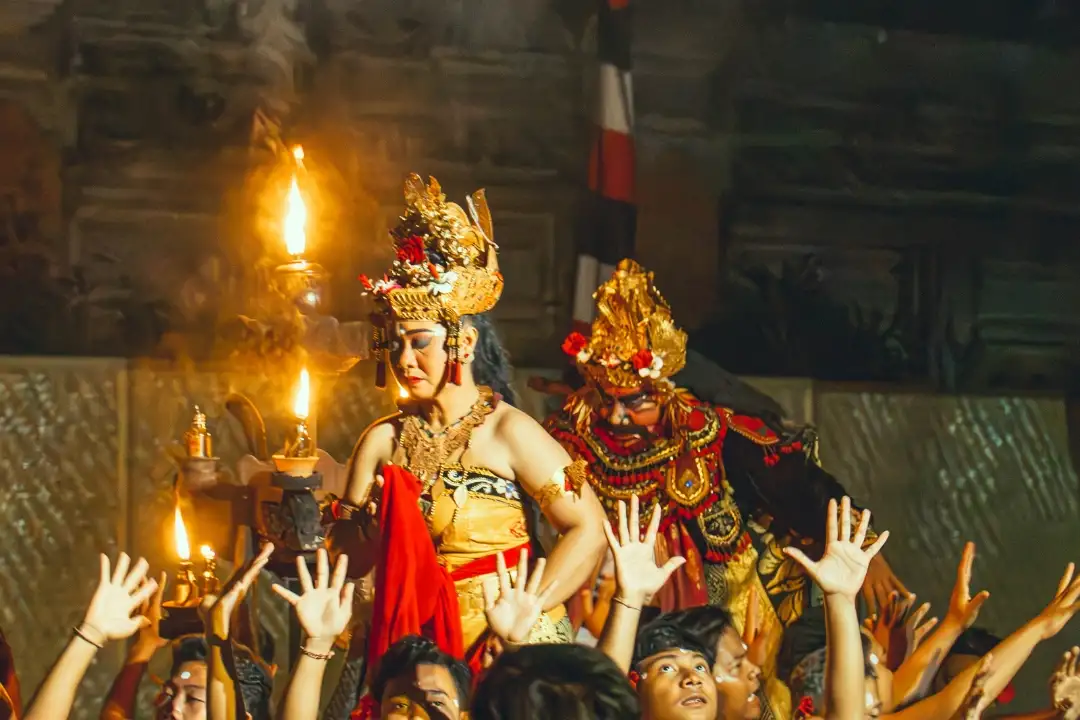
Each character has a different role:
Rama represents courage and responsibility.
Sita represents emotional strength and devotion.
Hanuman represents loyalty and powerful energy.
Jatayu represents sacrifice and bravery.
Ravana represents conflict and challenge.
The Kecak performers create the rhythm that connects the entire story.
Together, these characters transform the performance into more than a traditional dance.
They create a story that visitors can follow through movement, expression, and atmosphere.
This is why understanding the characters before attending can make the experience more meaningful.
You begin to notice the emotions behind each movement.
You understand the relationships between characters.
You appreciate how the story develops throughout the performance.
Experience the Ramayana Through Kecak at Puseh Temple Batubulan
A Kecak performance is not only about watching traditional movement.
It is about experiencing a story that continues through Bali’s living heritage.
At Puseh Temple Batubulan, visitors can experience:
- Kecak Dance
- Ramayana storytelling
- Fire Dance
- Sang Hyang Jaran
- Classic Balinese temple atmosphere
Daily Performance
18.30–20.00 WITA
Ticket Price
IDR 150,000 per person
Discover the characters, emotions, and story behind one of Bali’s most recognizable cultural performances.
Reserve your seat at Puseh Temple Batubulan and experience how Rama, Sita, Hanuman, Jatayu, and Ravana bring the Ramayana story to life through Kecak.


